The Cultural Policy Lab TikTok Channel
In 2025, the Cultural Policy Lab launched a TikTok channel - not as marketing, but as a strategic learning project. The channel is an experimental space for exploring how cultural policy issues can become visible, understandable and debatable beyond their expert public.
The Challenge
The cultural sector is full of debate - but much of it circulates within relatively closed expert publics. At the same time, cultural policy questions are at the centre of wider social conflict: abuse of power in institutions, populist attacks on culture, the politicisation of language, the impact of AI on creative work. Yet these issues are rarely translated systematically into social media by established actors. The challenge was not to do marketing, but to build a discourse space in which cultural policy becomes visible and connectable beyond its own bubble.
Our Approach
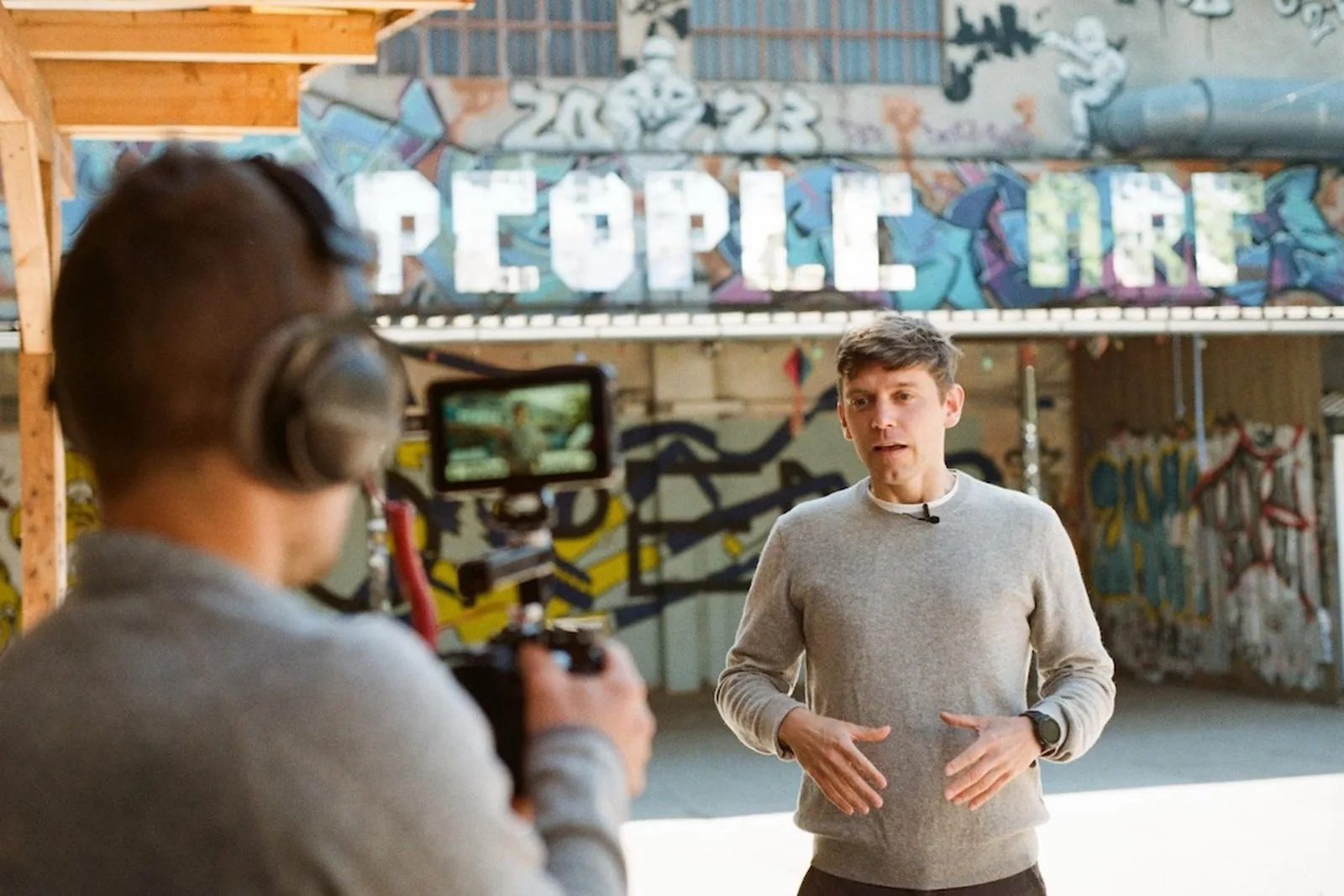
Our approach was to treat the move into social media not as a side activity, but as a strategic learning project. The TikTok channel became an experimental space: which topics generate resonance? Which formats work for complex issues? How can a credible tone be developed that doesn't sound institutional but still carries analytical weight? We tested different approaches: concise short-form videos on current conflicts, behind-the-scenes insights into our work, reflections on strategy, participation and impact measurement, and first steps towards longer, research-based formats on YouTube. Exchange with other creators and the community's direct responses were central - because cultural policy on TikTok means not sending finished messages, but engaging with an environment that is more immediate, more confrontational and more public than conventional expert debates. Strategic development within the team was driven particularly together with Sophia Leo.
The Solution
The result is a cultural policy TikTok channel that addresses issues widely debated in the field but rarely handled with analytical depth on social media. During development, three topic areas emerged as particularly resonant: questions of power in the cultural sector, the effects of AI on culture and creative professions, and culture-war dynamics around language and the political charging of cultural questions. At the same time, there was clear interest in deeper insights into strategic work - when communicated accessibly, personally and transparently. The channel became more than a distribution outlet. It helped sharpen audience understanding, prioritise topics and refine our language. In the first months, the channel reached around 160,000 post views, approximately 600 followers, 3,500 comments and over 5,400 likes. For us, these numbers matter less as an end in themselves than as evidence that a real audience for cultural policy topics exists beyond the familiar expert public.
Impact & Transfer
Building the TikTok channel demonstrated that real interest in cultural policy issues exists on social media - but also that developing such publics requires time, editorial discipline and continuity. The thematic range of the most successful posts shows where resonance currently emerges: a video on the culture-war dimensions of gender-inclusive language, an analytical take on pop and high culture through the Eurovision Song Contest, a contribution on the effects of AI on creative work, a contextualisation of the abuse-of-power debate at Berlin Ensemble, and a video on the need for stronger strategic thinking in cultural policy. What connects these posts is that they translate cultural policy questions into a language that reaches beyond the expert public - at the intersection of culture wars, AI, questions of power and the ambition to make cultural policy visible as a field of active shaping. In parallel, we are working to transfer the experience gained on TikTok into building a YouTube channel with higher-production, more research-driven content. This requires different structures - and it is precisely this connection between research and communication that the Cultural Policy Lab brings in a unique way. Dr. Christian Steinau led a Transfer Lab at the Kaete Hamburger Kolleg global dis:connect from 2021 to 2025, developing transfer strategies for an international research centre. His background in science communication shapes how we work at the Cultural Policy Lab: treating research and communication not as separate disciplines, but as interconnected practice. We are convinced that disciplinary boundaries will continue to shift and expand - and that the future of cultural policy knowledge work lies exactly at this intersection. For the Cultural Policy Lab, this project was both pioneering work and a learning process. Together with Sophia Leo, we developed strategic know-how in platform logics, creator communication and community building that now feeds into the lab's broader communication and transfer work. In the context of the lab's spin-off, this channel is part of the foundation for our future work: an attempt to translate cultural policy into new publics - and a contribution to a more transparent, more contemporary form of knowledge work.