When old answers fall short, we need Cultural Policy Lab — Forschung, Strategie, Daten und neue Werkzeuge

Knowledge work is changing fundamentally. We shape what comes next — and develop services for a new era.

Research, strategy, data and new tools — for cultural policy and education.

Many things no longer work the way they used to: strategies remain without consequence, participation fails to reach the right people, data is collected but never used.

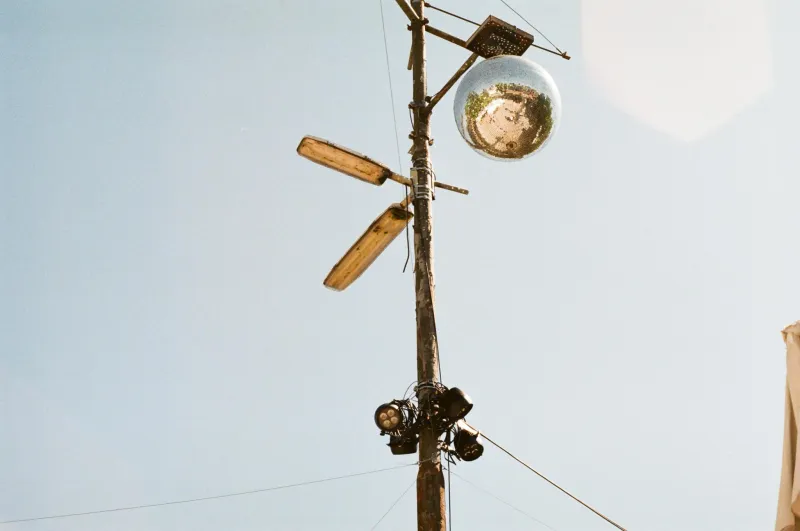
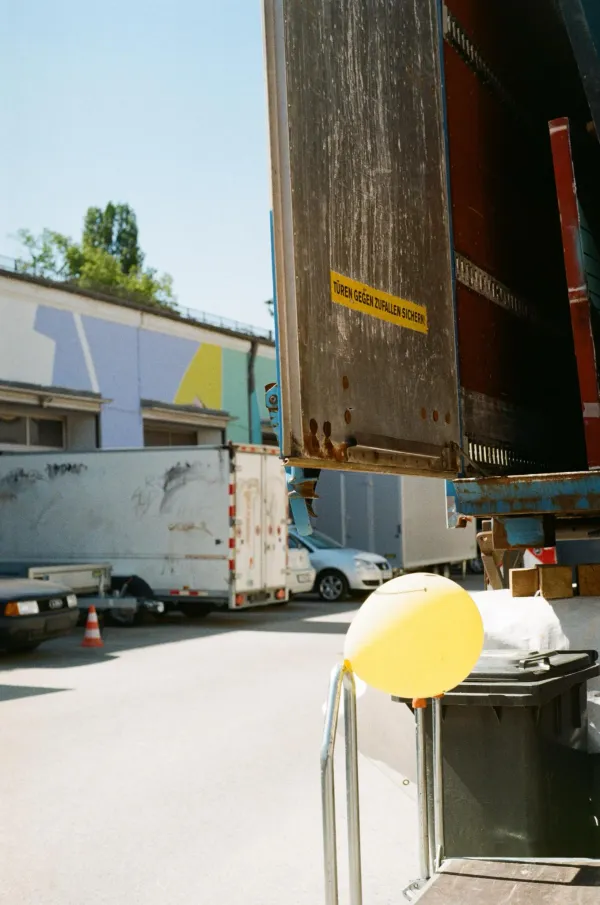
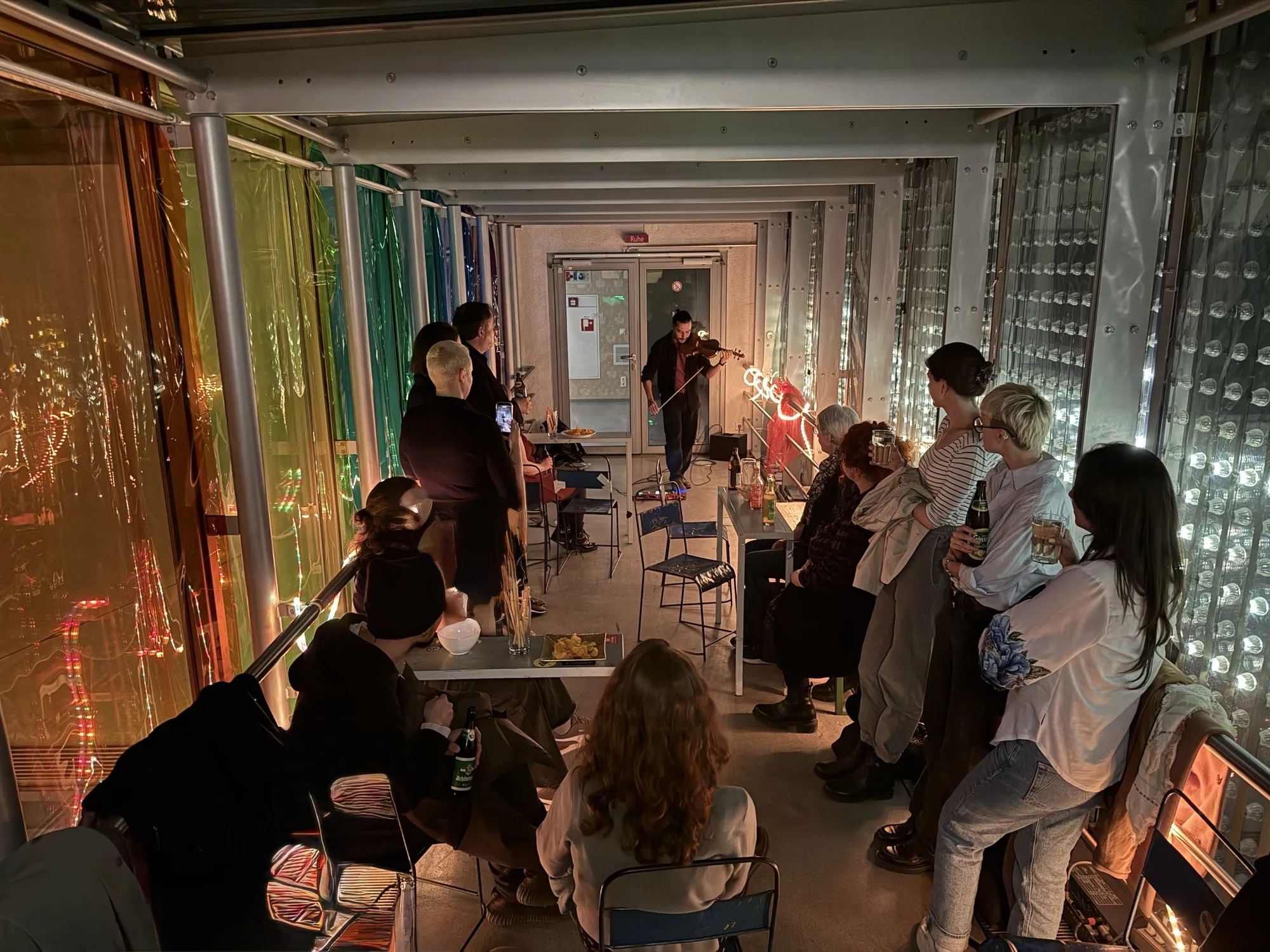
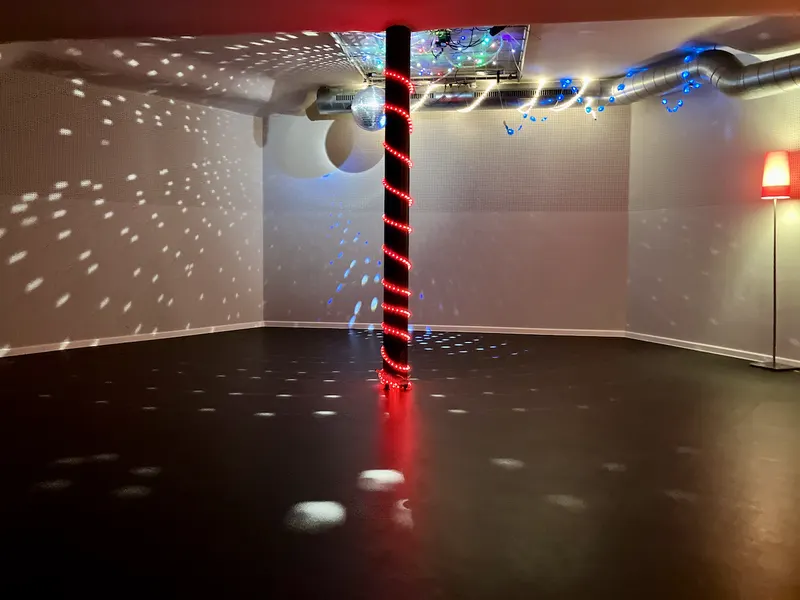
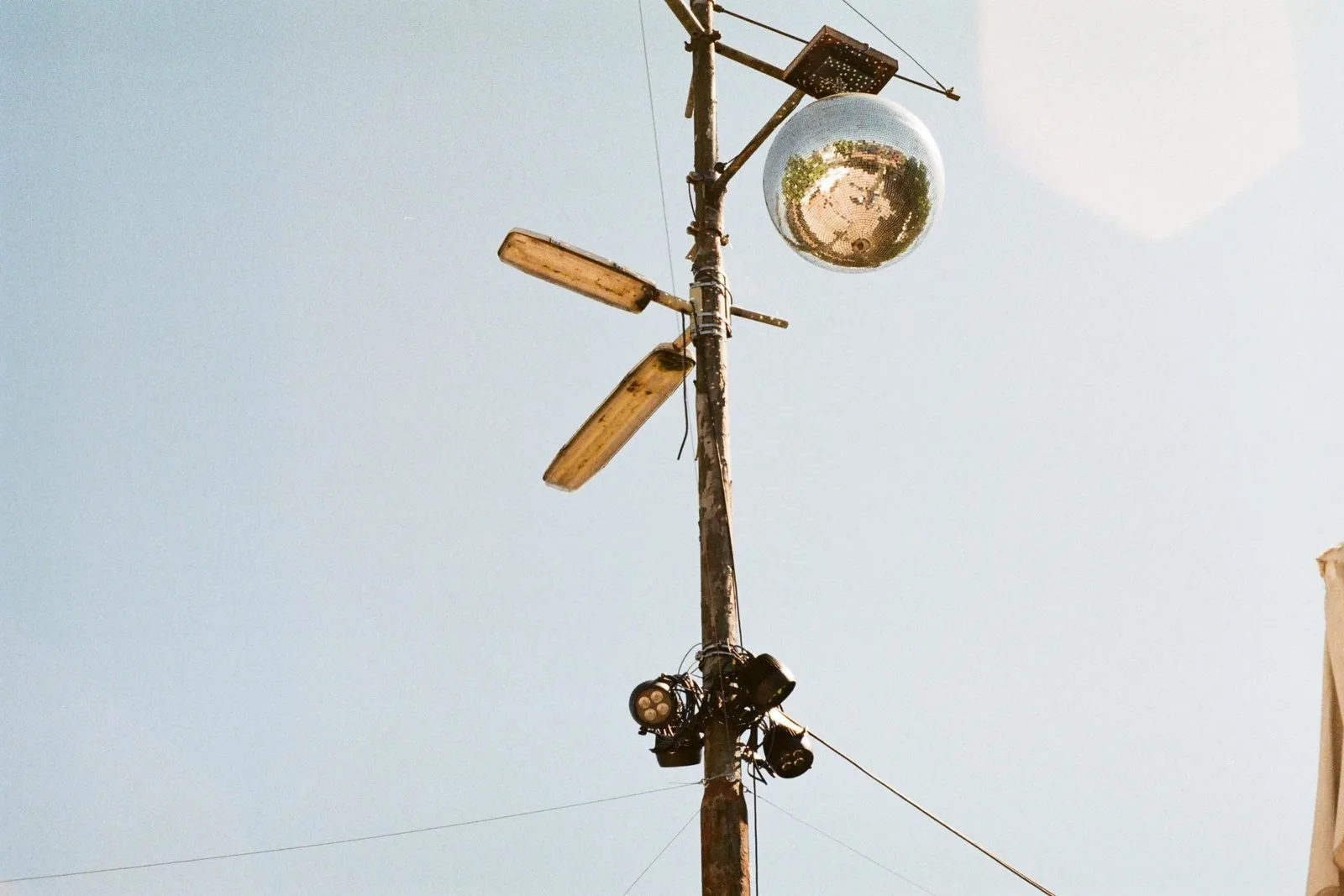
Cultural Policy Lab Diskokugel Backstage Hinterhof mit Ballon

The Cultural Policy Lab was created to change that. We develop new processes for research, evaluation, strategy, participation and knowledge work. For organisations that don’t just want to react, but to shape.

We work analytically, internationally and with full commitment. Not as service providers delivering a finished product — but as partners who take responsibility for good solutions.

Selected work across research, strategy, and data practice — designed to create real capability, not just reports.

KI und Kreativwirtschaft in Bayern
Research · 2025–2026

The Impact of AI on the Cultural and Creative Industries in Bavaria

Together with the Bavarian Association of the Cultural and Creative Industries, vbw and IW Consult, the Cultural Policy Lab has been working since 2025 on a pioneering study on AI in Bavaria's cultural and creative industries. The project combines economic analysis, sector expertise and transfer work in order to identify use cases, needs for action and concrete measures for AI adoption across the field.
Policy Baukasten Familie und Care am Theater
Strategy · 2023–2024

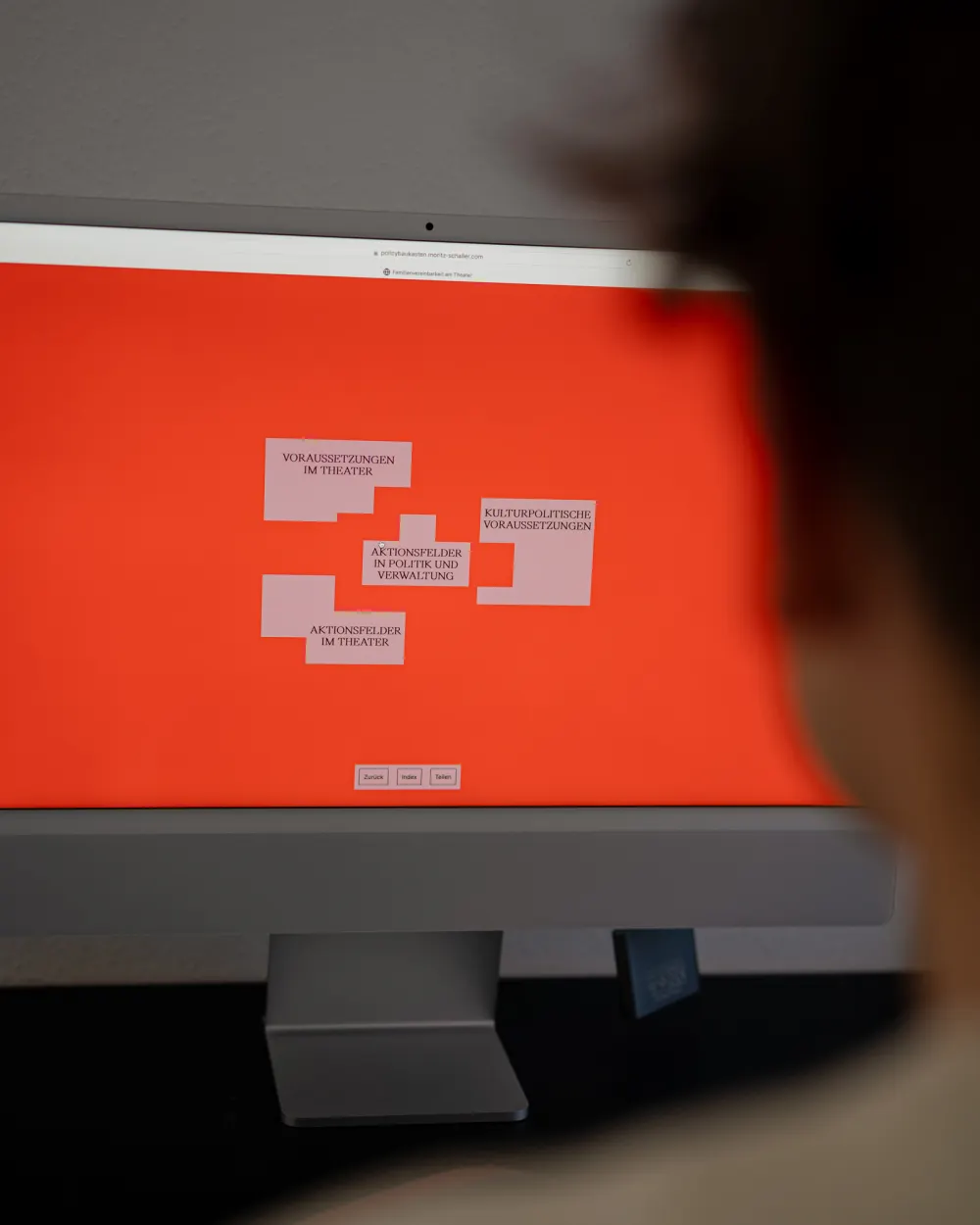
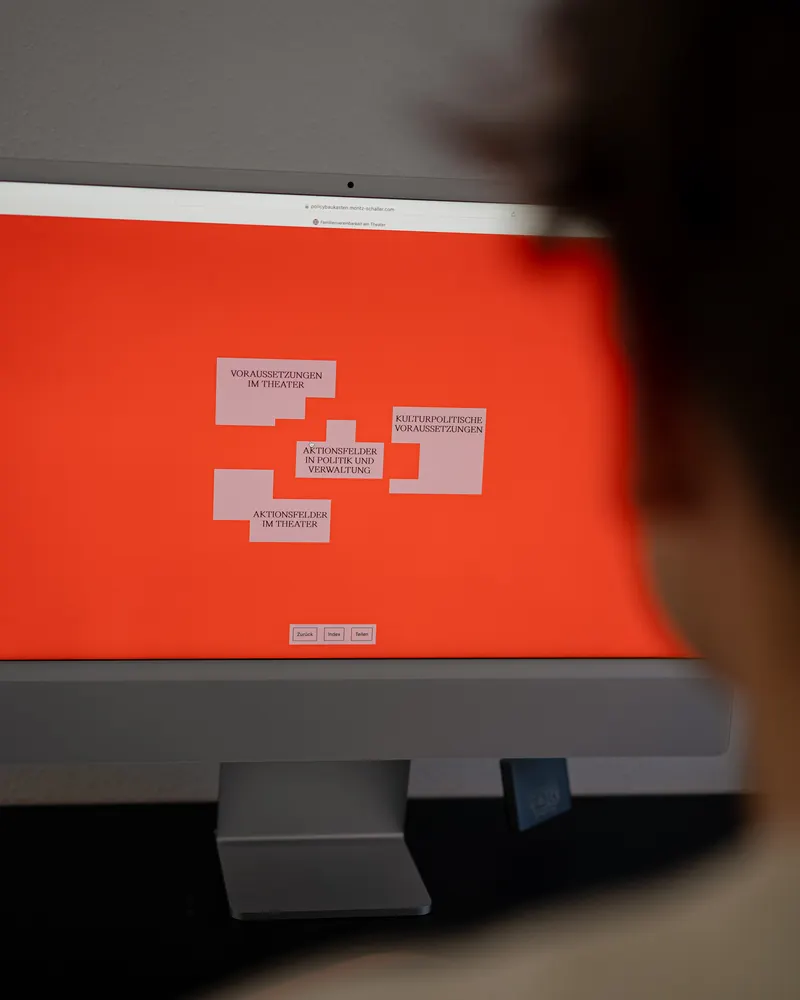
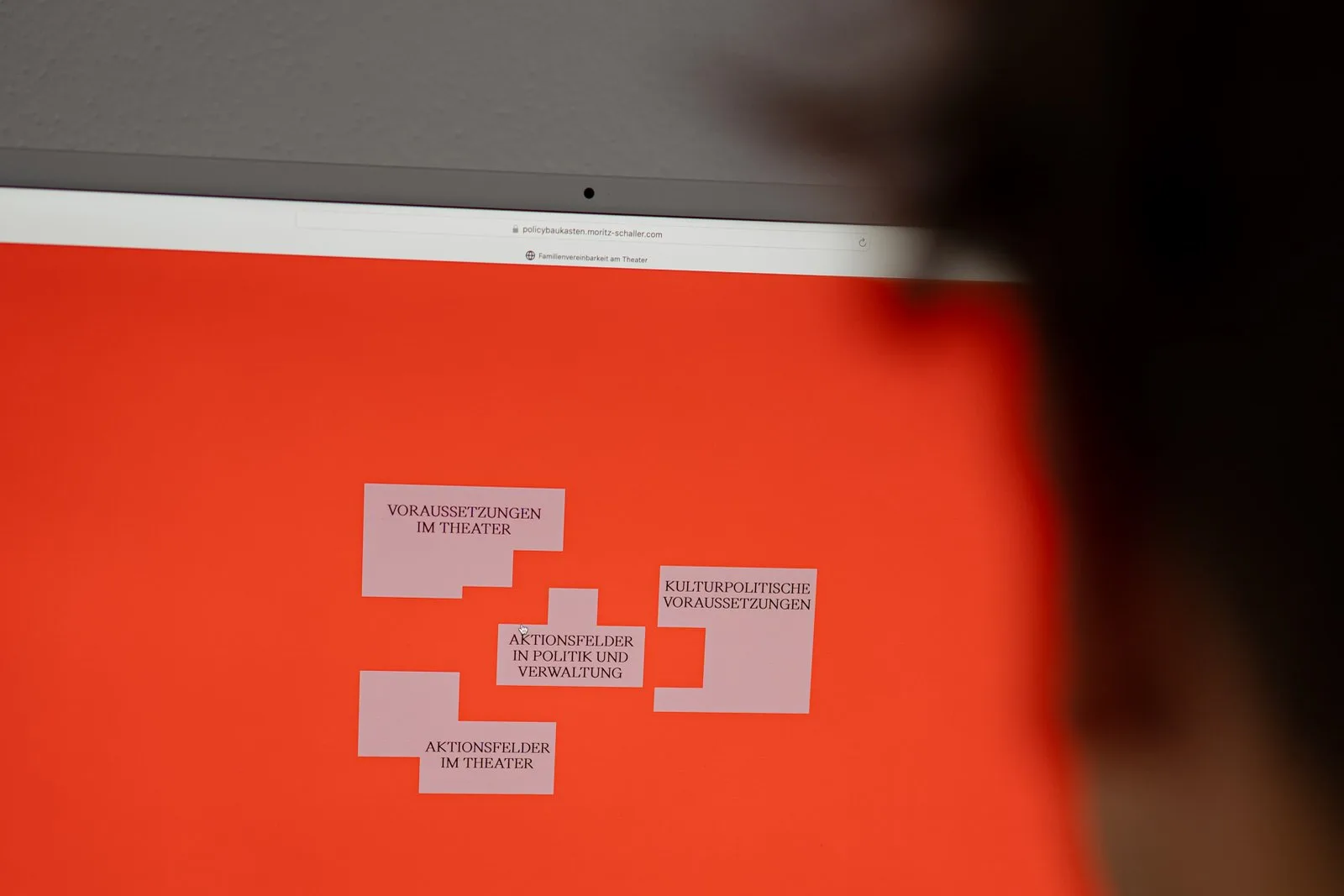
Policy Toolkit: Family and Care in Theatre

An interactive policy toolkit that frames family and care in theatre as a strategic design challenge. With 4 categories, 20 operators and 86 indicators, it provides an instrument for institutions to analyze their status quo, set priorities and structure transformation processes.

Landeskulturbericht NRW Kulturstatistik
Research · 2025–2026

NRW State Culture Report: Cultural Statistics and Data Visualisation

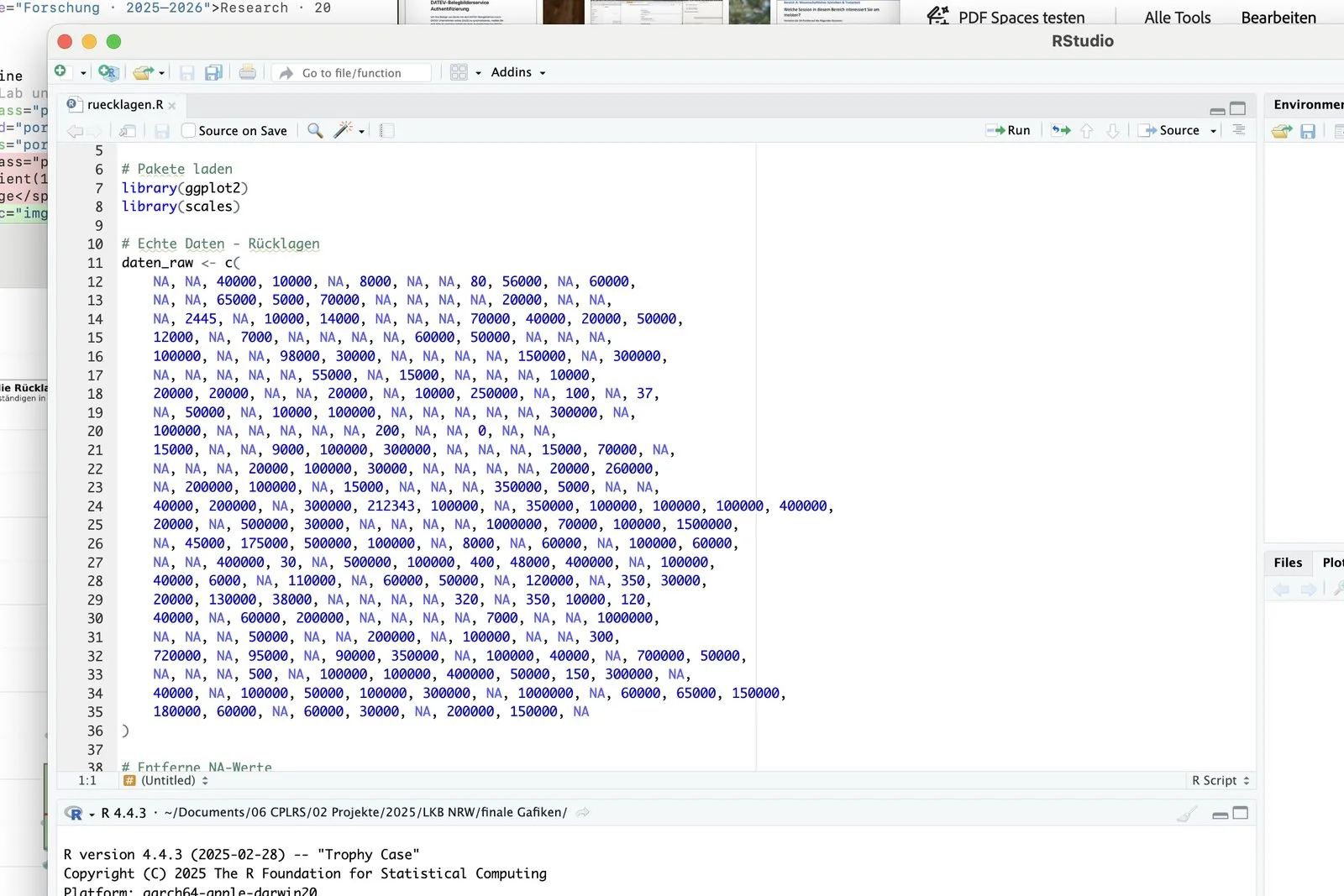
For the NRW State Culture Report, the Cultural Policy Lab is working on the chapter on the economic and social situation of cultural workers. The project combines secondary data analysis, original visualisations in R and cultural policy interpretation — making complex findings usable for ministerial decision-making and the broader cultural policy discourse.

Workshop Wirkungskommunikation Klassik Stiftung Weimar
Communication · Januar 2026

Impact Communication and Data Storytelling

In January 2026, we worked with Klassik Stiftung Weimar in an interdisciplinary workshop to connect impact, data and strategic communication more closely. The process resulted in two concrete tools - a Data Storytelling Canvas and a Resonance Radar - to rethink the relationship between reporting, activities and strategic narrative.

KI-Labor und angewandte KI
Strategy · seit 2026

AI Lab and Applied AI for Culture, Evaluation and Education

Since 2026, the Cultural Policy Lab has placed artificial intelligence at the centre of its development. The focus lies on new forms of knowledge work, data-sovereign AI solutions and the question of how AI can be used in cultural, educational and evaluation contexts in ways that create more time for what matters most.

TikTok-Kanal Cultural Policy Lab
Communication · seit 2025

The Cultural Policy Lab TikTok Channel

In 2025, the Cultural Policy Lab launched a TikTok channel - not as marketing, but as a strategic learning project. The channel is an experimental space for exploring how cultural policy issues can become visible, understandable and debatable beyond their expert public.

Cultural Policy Lab Entwicklung
Strategy · 2017–2025

The Development of the Cultural Policy Lab

The Cultural Policy Lab emerged from an effort to connect research in the humanities and arts more systematically with cultural policy, public administration and practice. What began in a university context gradually developed into a lab for transfer, publication and institutional innovation.

We put data at the centre — as a foundation for better decisions, more effective strategies and learning processes.

Every project follows four steps: understand, distil, shape, enable. New tools and technologies are not an add-on — they change how we work at every step.

01 Understand

Analyse contexts, gather knowledge, map stakeholders, evaluate data. The starting point is not the solution, but the right question.

SERVICES
Contract research · Studies · Evaluations · Stocktaking · Secondary data analysis

02 Distil

Translate complexity into usable orientation. With visualisations, syntheses and dynamic research designs, we turn material into decision-making foundations.

SERVICES
Data visualisation · Data storytelling · Policy briefs · Interactive dashboards

03 Shape

Develop strategy processes, participation, communication and new formats so that not just insight emerges, but movement.

SERVICES
Strategy development · Digital-analogue participation · Strategic communication · Workshops · Cultural policy consulting

04 Enable

We don’t just leave behind reports, but better routines, more judgement and more capacity to act.

SERVICES
Trainings · Guides & toolkits · Organisational development · Technology workshops
01 / 04

We don’t just accompany the field — we want to move it forward.

We don’t simply offer individual services. We work at the points where it matters whether culture and education merely react to change — or lead the way.

From linear reports to organic monitoring

We turn reporting obligations into ongoing orientation.

For cultural reports, evaluations and funding monitoring, we develop data-driven formats that can be continuously updated — instead of just capturing cut-off dates.

Typical applications Kulturberichte · Evaluationen · Sekundärdaten · Monitoring

Research and proof of concept

We build prototypes for the next generation of knowledge work.

We test new approaches early in the field — such as knowledge graphs, AI in evaluation and monitoring, or new routines for data-driven cultural policy.

Typical applications Wissensgraphen · KI in Evaluation · Automatisierung · Kulturstatistik

Data storytelling and strategic communication

We connect evidence and narrative.

We translate research and data into connective communication — for external impact and better internal coordination.

Typical applications Datenvisualisierung · Wirkungsberichte · Prozesskommunikation · Abstimmung

Digital-analog participation and cultural policy formats

We design participation so that exchange becomes direction.

We develop conferences, workshops and participation processes that connect digital and analog formats and effectively distil results.

Typical applications Konferenzen · Workshops · Partizipation · Formatdesign

Translating AI for culture and education

We translate AI into responsible and productive practice.

We help organisations deploy AI in ways that are understandable, data-sensitive and practical — from governance and policies to concrete use cases.

Typical applications AI Policy · Transparenz · Datenschutz · Use Cases

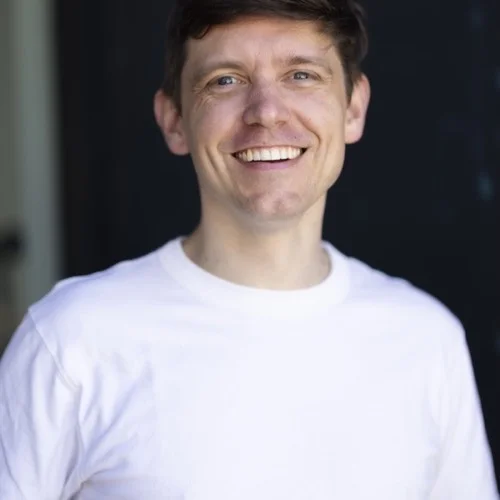
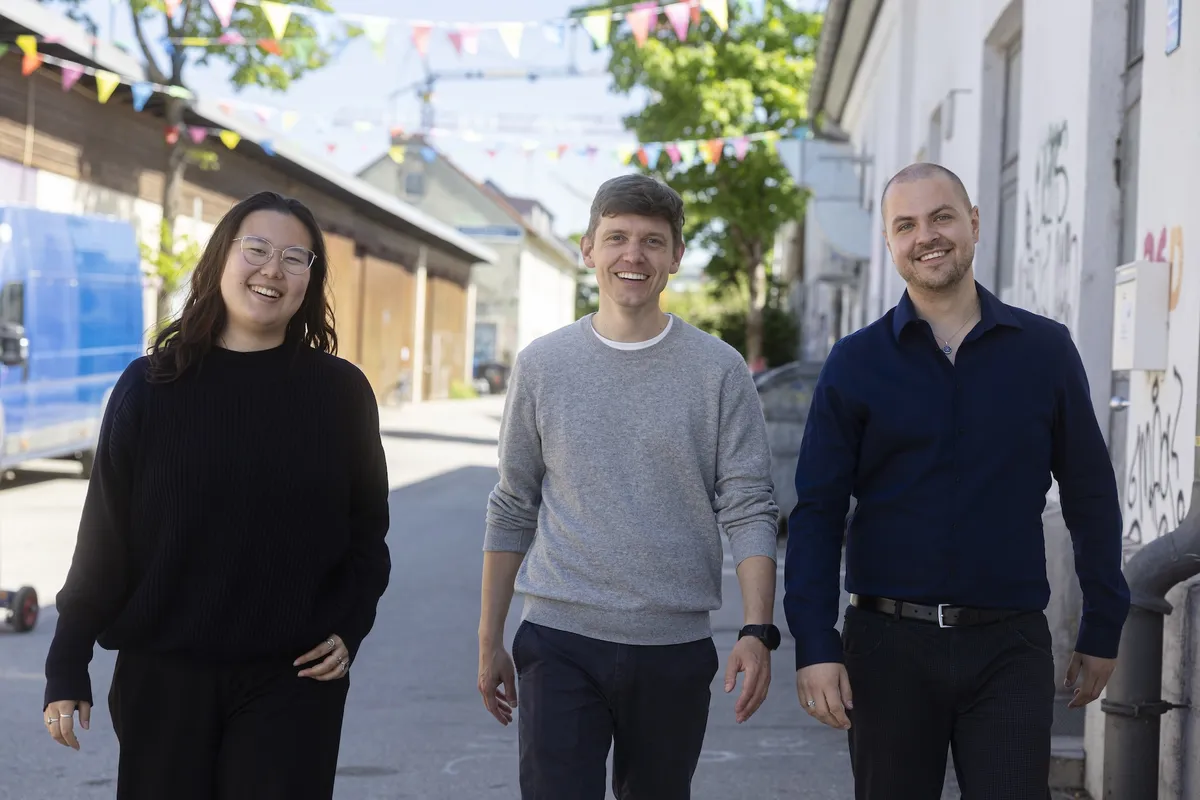
Christian founded the Cultural Policy Lab with the vision of bridging the gap between cultural policy research and real-world practice. With his versatile background and a passion for design, he leads the lab's strategic direction and ensures that every project combines intellectual rigor with practical impact. Christian earned his PhD with a dissertation on the construction of aesthetic judgments, using art criticism as a literary genre as a case study. He worked in a junior research group on "Creativity and Genius" and, from 2021 to 2025, led the Transfer Lab of the Käte Hamburger Kolleg "Dis:connectivity in Processes of Globalisation". His current focus areas include AI literacy for cultural institutions and new governance models for the cultural sector. He is the father of three daughters and lives in Munich.

Sophia combines creative communication with strategic consulting and evaluation. As Creative Media Director, she played a key role in building the Cultural Policy Lab's TikTok channel and contributed to developing YouTube and social media formats. Today her focus lies in facilitation, power-critical analysis, participation and process design, as well as strategy and evaluation processes. With her background in media and cultural studies, she facilitates focus groups and interviews and brings a reflective, process-oriented perspective to project work.

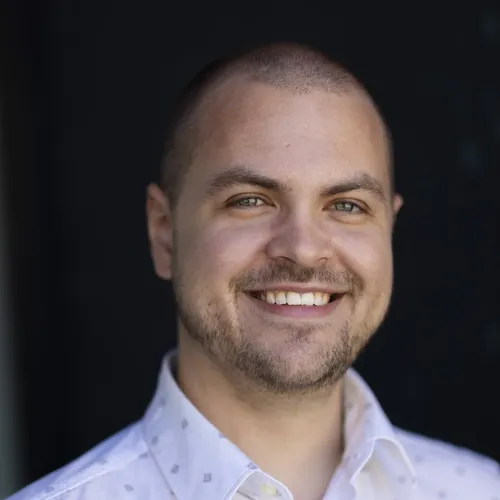
Daniel is a research associate at the Cultural Policy Lab. His focus lies on data-driven analysis and project management. He not only accompanies the AI-assisted preparation of data and documents, but also translates them through careful data storytelling, drawing on his art-historical background and keen visual sensibility. In addition to his expertise in cultural policy, Daniel also brings specialist knowledge of the emerging field of art in outer space.

Apr 2026
NEWS

Cited in Research Professional News on ERC Restrictions and AI

Cited in Research Professional News on ERC Restrictions and AI

The European Research Council is tightening its resubmission rules. Those who are rejected face longer waiting periods before they can reapply. The reason given: a 'dramatic increase' in application numbers. ERC President Maria Leptin suspects AI as a possible driver. More than 500 researchers are protesting in an open letter.

On page 2 of the article, Christian Steinau's position appears directly after a quote by the influential Professor Helga Nowotny, who holds 'AI tools' responsible for the increase in applications and writes that there is no way to identify proposals written 'with AI and those without AI.'

'If institutions answer AI-driven scale only with bans, waiting periods and restrictions, they are treating a structural problem as if it were an applicant problem. Our institutions must evolve, and the ERC is simply too important to respond with such an unimaginative signal.' — Christian Steinau, Cultural Policy Lab

When institutions respond to AI-driven scaling primarily with bans, waiting periods and restrictions, they are treating a structural problem as an individual applicant problem. This is exactly why the Cultural Policy Lab experiments with new ideas for evaluation, knowledge work, participation and decision-making processes.

Frances Jones: "ERC grant application restrictions 'undermine fairness'", Research Professional News, April 2026.

Zum Artikel →
Apr 2026
LAB

METRUM Guests — Exchange on the Future of Knowledge Work

METRUM Guests — Exchange on the Future of Knowledge Work

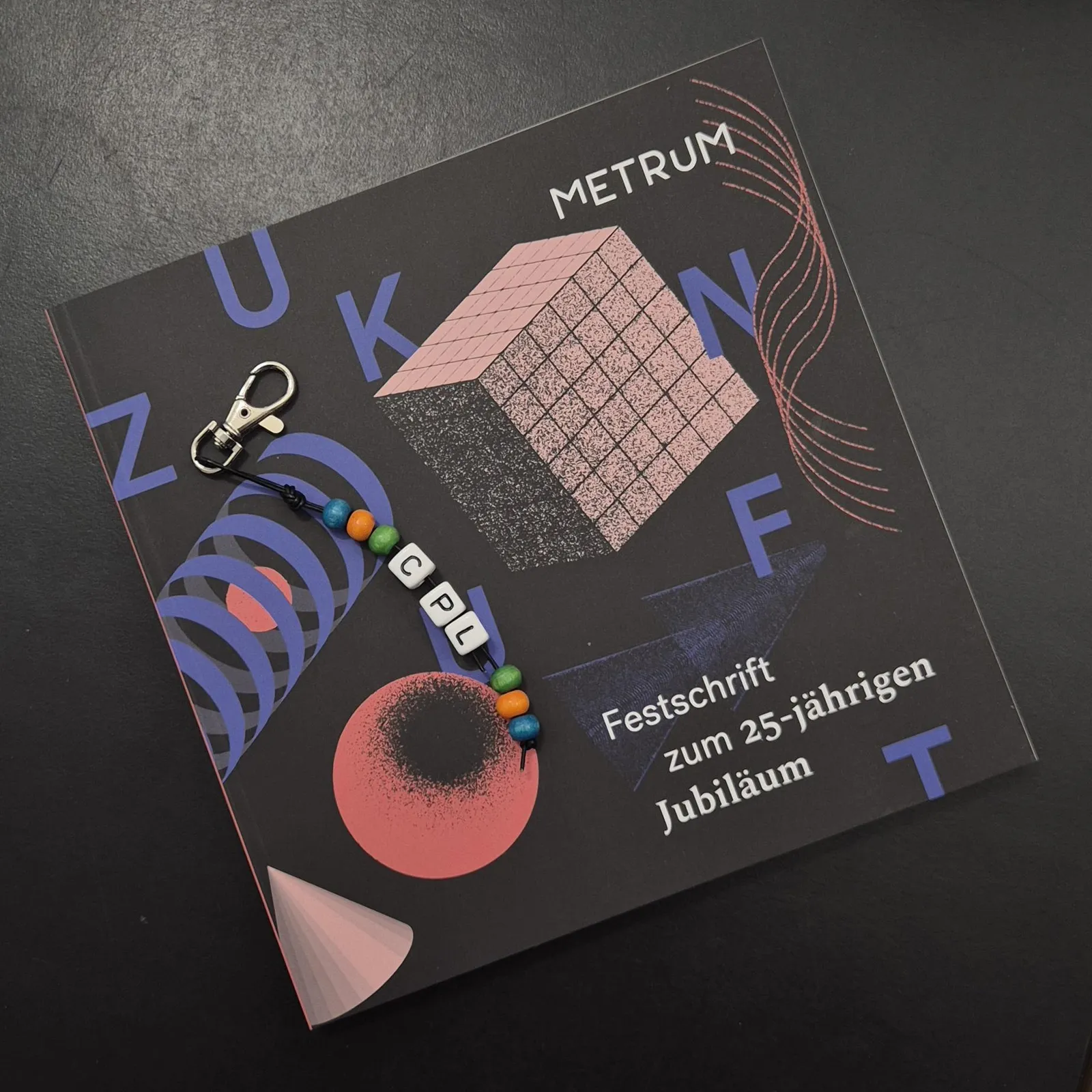
CPL-Anhänger auf der METRUM Festschrift zum 25-jährigen Jubiläum

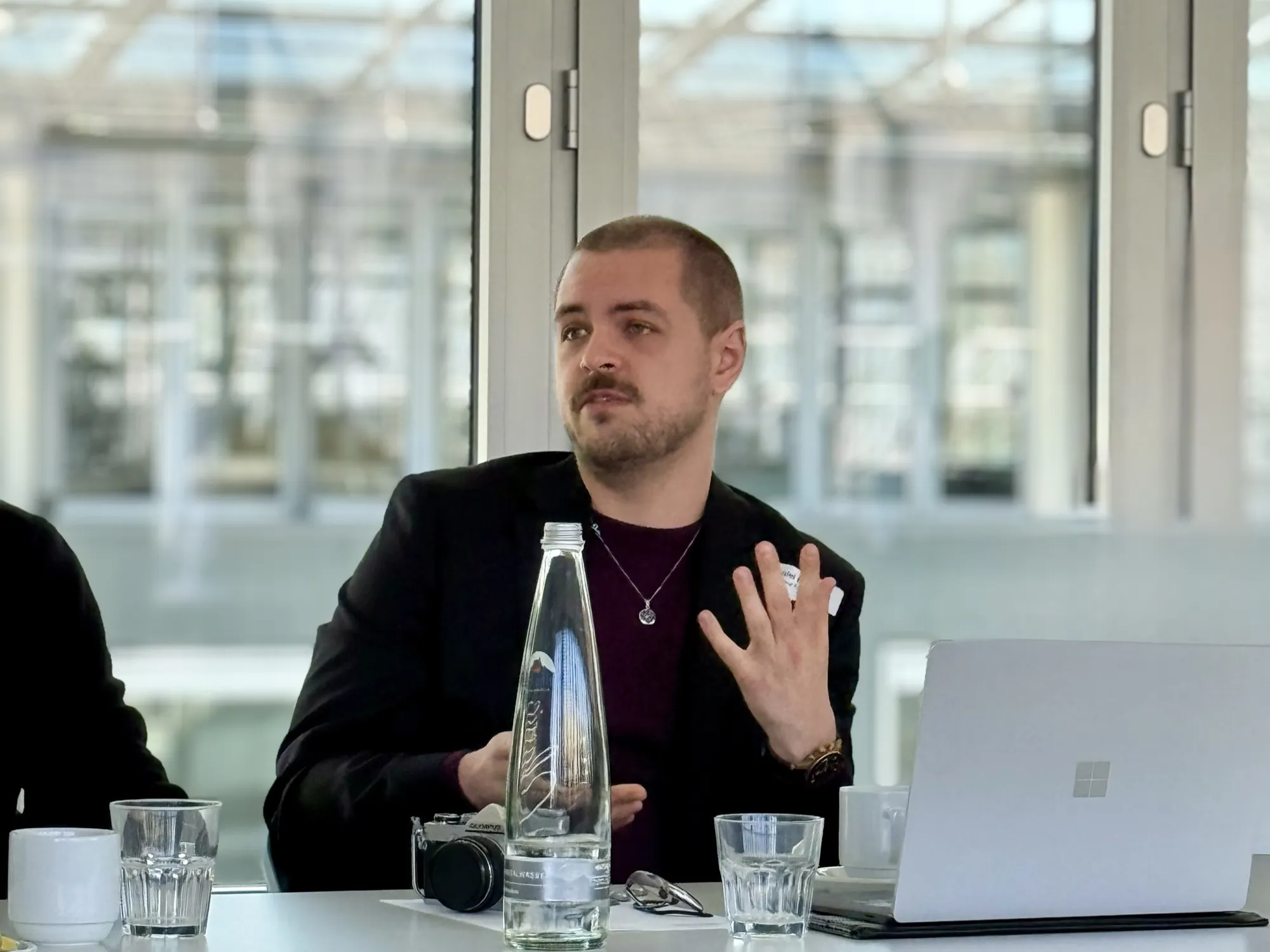
As part of METRUM's guest format, Daniel Bucher and Christian Steinau gave insights into the work of the Cultural Policy Lab. The conversation centred on a question that is currently occupying us intensely: how is knowledge work in the cultural sector changing? For us, one thing is clear: the old world is no longer enough. Too many processes are too slow, too linear and too strongly separated into research, communication, participation and implementation. This is exactly where the sector needs new approaches. Topics included how data visualisation can improve decision-making, how participatory processes need to be rethought, why strategic communication must not be an afterthought, where value creation actually happens in services, and how AI can help bring quality and productivity together. For us as a young company, this was a very valuable exchange. Such conversations show how much movement there is in our field right now. Innovation does not only happen in technology. It also happens where knowledge is condensed, communicated and translated into impact. This is exactly where culture and the humanities play a key role.

Zu METRUM →
Apr 2026
LAB

Cooperation with Coachingzonen Wissenschaft — AI Research Workshop

Together with Jutta Wergen (Coachingzonen Wissenschaft), Christian Steinau launches an AI Research Workshop — a monthly space for doctoral researchers to exchange, learn and reflect on the fundamental transformation of knowledge work.

Coachingzonen Wissenschaft — Ressourcen für Promovierende

The AI Research Workshop is designed specifically for doctoral researchers and translates questions of AI-supported academic work into practical, target-group-specific formats. Topics range from the use of local AI models, self-understanding and support across different phases of academic work, to presenting with AI tools, data visualisation, data sovereignty and qualitative content analysis. Once a month, Christian Steinau opens a space for exchange, peer learning and reflection. The cooperation bundles what the Cultural Policy Lab has been testing in its own practice for some time — and brings it directly into the places where it is most urgently needed.

Zu Coachingzonen Wissenschaft → View project →
Apr 2026
PAPER

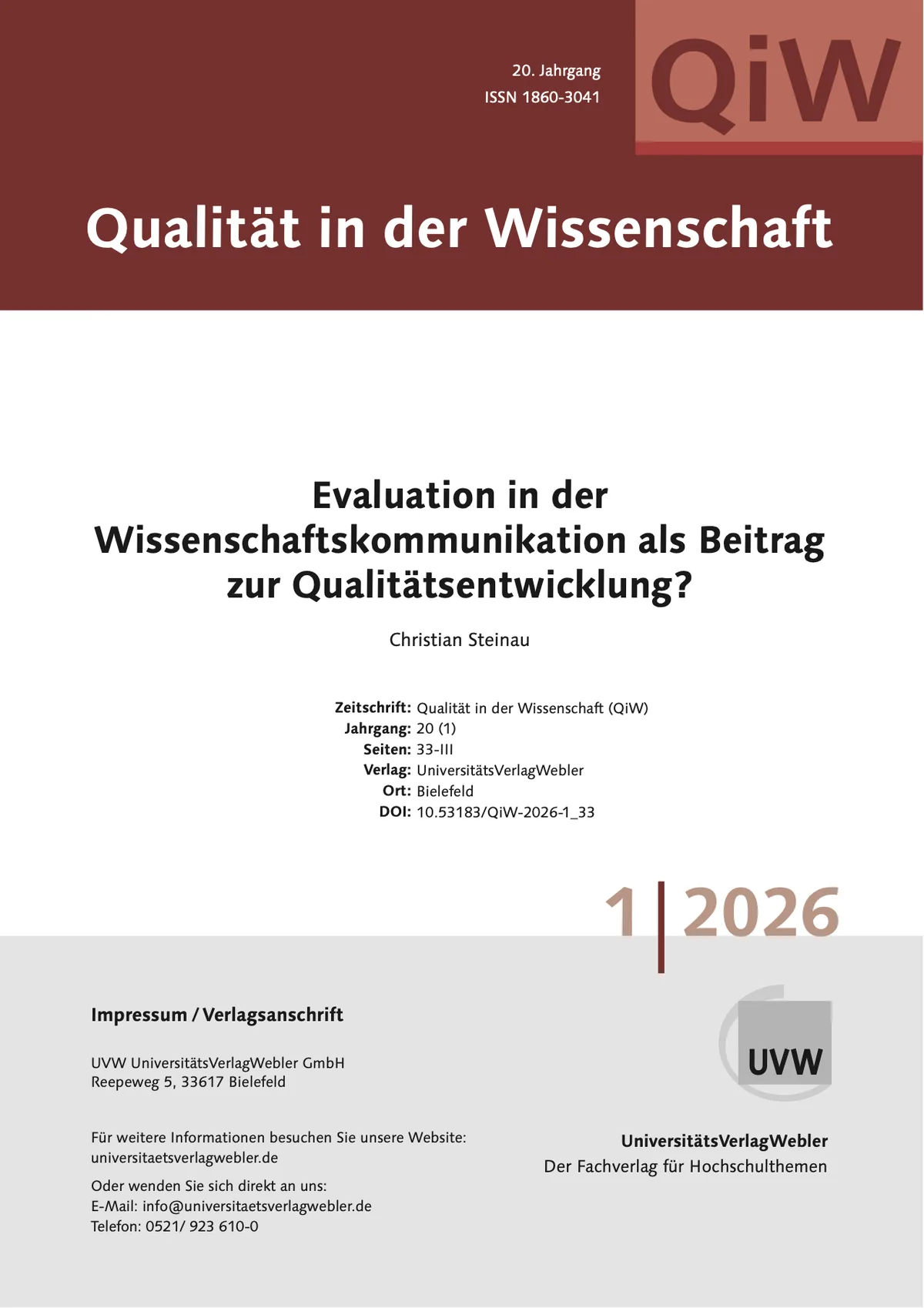
Evaluation in Science Communication as a Contribution to Quality Development?

In the journal Qualität in der Wissenschaft (QiW 1/2026), Christian Steinau asks how science communication can be evaluated so that evaluation serves learning — not control.

Cover of the journal Qualität in der Wissenschaft (QiW) 1/2026, UniversitätsVerlagWebler

We have talked for years about the importance of science communication. But when it comes to strategic decisions, it rarely sits at the table. In this contribution for QiW (1/2026, UniversitätsVerlagWebler), Christian Steinau looks back at a slice of his university career and asks: what was the most frustrating part? The honest answer is not the work itself, but that the knowledge produced in the process — about audiences, formats and what actually works — remains strategically without consequence. That is not an individual problem. It is a structural one. When funding programmes are evaluated, something odd happens: science communication appears as a cross-cutting task, gets acknowledged, and is then assessed with indicators that fail to do justice to its complexity. What worked on the ground, which formats failed, which conflicts of objectives arose — all of that stays invisible. At the same time, actors such as Wissenschaft im Dialog and the Nationales Institut für Wissenschaftskommunikation (NaWik) have built an impressive practice of formative evaluation. Yet this knowledge gets stuck in individual projects. It rarely reaches the level where strategies and resources are decided. The decisive question is therefore not whether we should evaluate more — but how we design evaluation so that it serves learning and not control. Drawing on international examples, the article argues for flexible evaluation frameworks that allow context-specific design, and for dedicated interface structures that connect practical experience with institutional strategy. Research, communication and quality management still operate in separate silos. The people working in science communication and transfer are partners in organisational development — and their experiential knowledge belongs in strategic decisions.

Zum Beitrag →
Mar 2026
EVENT

AI as Partner? Conference at Goethe-Institut Munich

Together with partners from DeGEval and the cultural policy field, we initiated a conference on new ways of using AI in evaluation, culture and cultural policy.

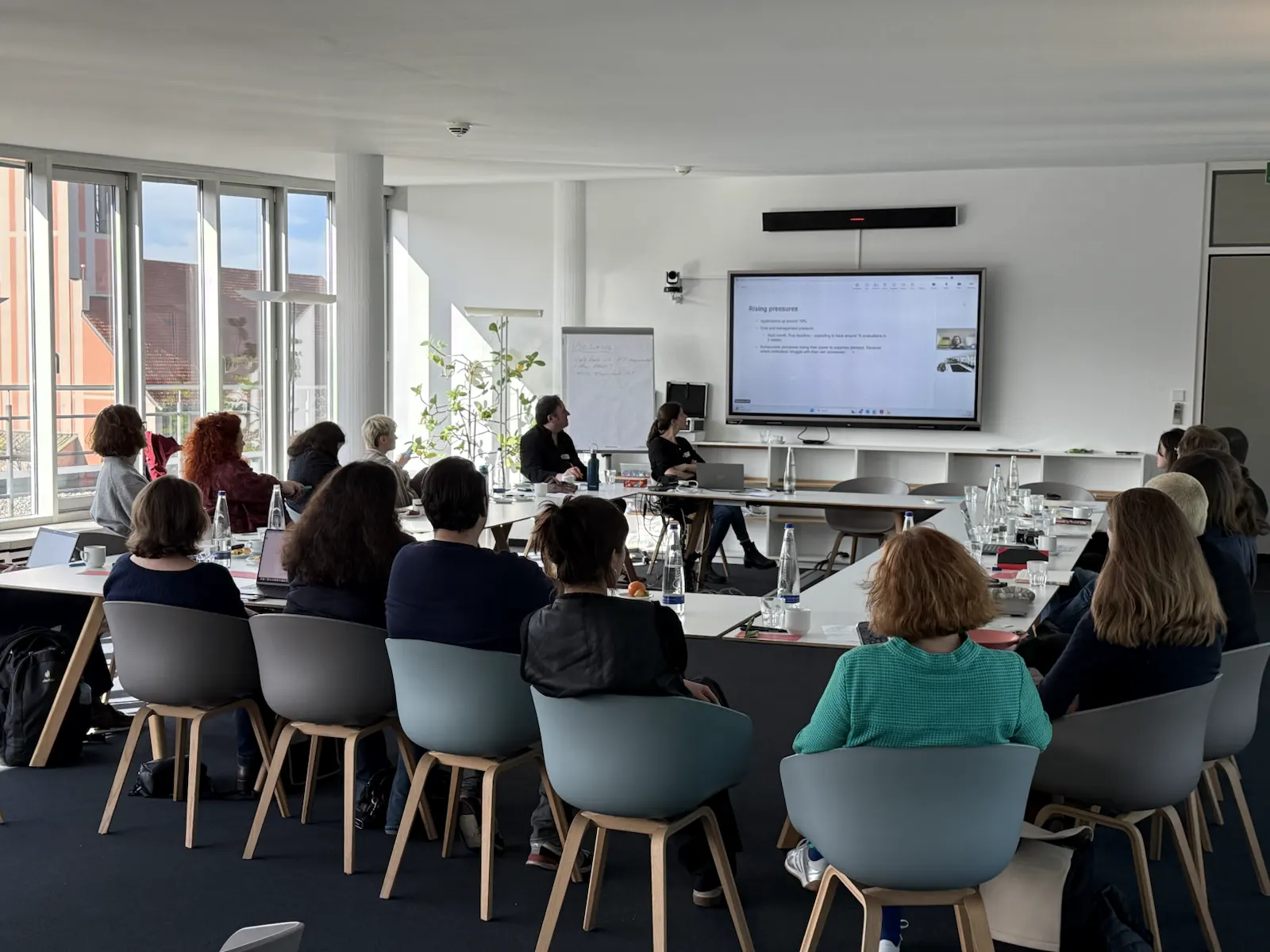
Workshop setting at the Goethe-Institut Munich conference on AI in culture and evaluation

The conference brings together actors who work with evaluation, reporting, analysis and cultural governance in their professional practice. It focuses on the opportunities, limits and open questions of using AI in professional contexts. For us, the event is an important step in testing new technologies not only in abstract terms, but within concrete working settings.

Zur Tagung → View project →
Mar 2026
PAPER

Why Cultural Policy Needs More Than a Defensive Fight Against AI

In an essay for the Kulturpolitische Gesellschaft, Christian Steinau argues for a design-oriented approach to AI in cultural policy and cultural practice.

Visual motif for the essay on AI and cultural policy

The essay sets out in programmatic terms how we understand the relationship between culture and AI. It argues that AI should be treated neither merely as a threat nor as a short-term hype, but as a matter of political design, institutional learning and cultural sovereignty. For the Cultural Policy Lab, the contribution is therefore also a substantive marker of its own further development.

Zum Essay → View project →
Feb 2026
LAB

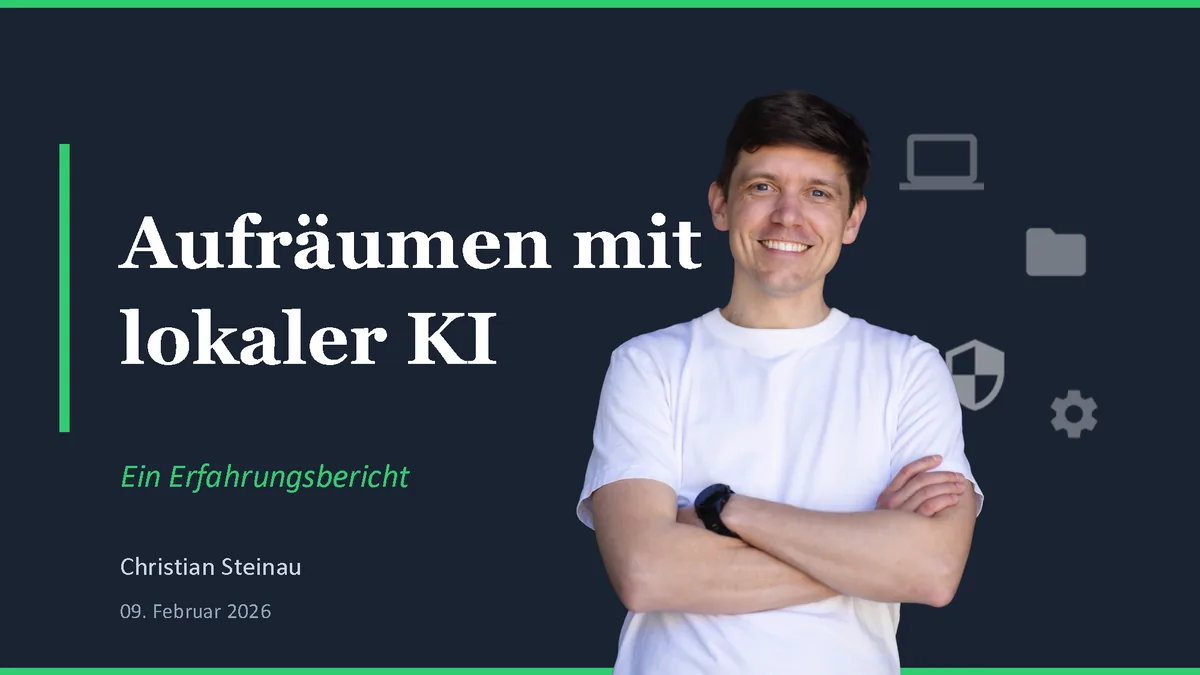
Lecture: Tidying Up with Local AI

First lecture as part of the soft launch of our application-oriented AI lab in cooperation with Coachingzonen Wissenschaft — a hands-on experience report on local, open-source AI in everyday research work.

Keyfigure: Aufräumen mit lokaler KI — Ein Erfahrungsbericht, Christian Steinau, 09. Februar 2026

The lecture marked the soft launch of our application-oriented AI lab, developed in cooperation with Coachingzonen Wissenschaft. As a lab, we experiment extensively with AI — because we want to understand first-hand how knowledge work is changing, and what that means for our sector, commissioned research, culture and creativity. These are very big questions; we tackle them through studies and events, but above all through hands-on practice: How do data-secure transcription and documentation work? Which local open-source AI models can be put to meaningful use today? How can coding get started with little prior knowledge? We are working on the future of knowledge work — and have set ourselves the goal of rethinking it.

Zu Coachingzonen Wissenschaft → View project →
Nov 2025
LAB

Impact Communication - Klassik Stiftung Weimar

In an interdisciplinary workshop with Klassik Stiftung Weimar, we worked on connecting impact, data and strategic communication more closely.

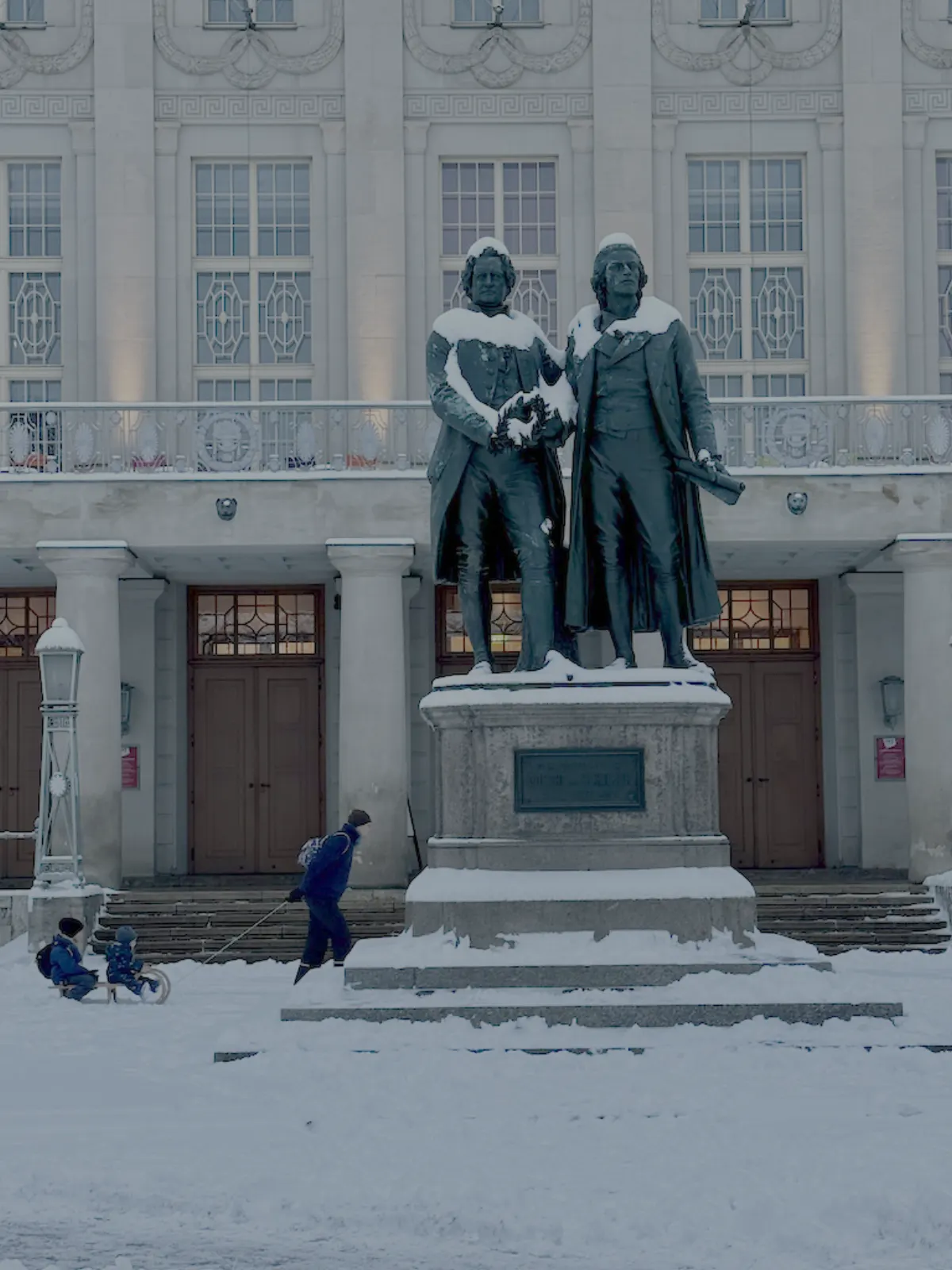
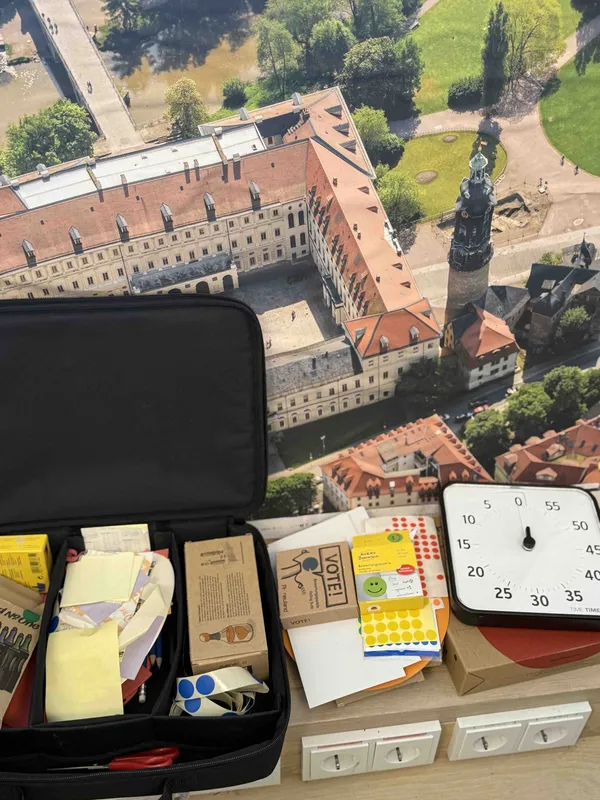
Winter view in Weimar for the Impact Communication workshop with Klassik Stiftung Weimar

Together with colleagues from strategy and audience development, we reviewed existing reporting structures and developed two concrete tools: a Data Storytelling Canvas and a Resonance Radar. Both formats help to move beyond documenting data points and connect them with strategic communication, institutional priorities and strong images. For us, the project was a precise showcase of how impact communication, audience development and data preparation can be brought together.

View project →
Nov 2025
EVENT

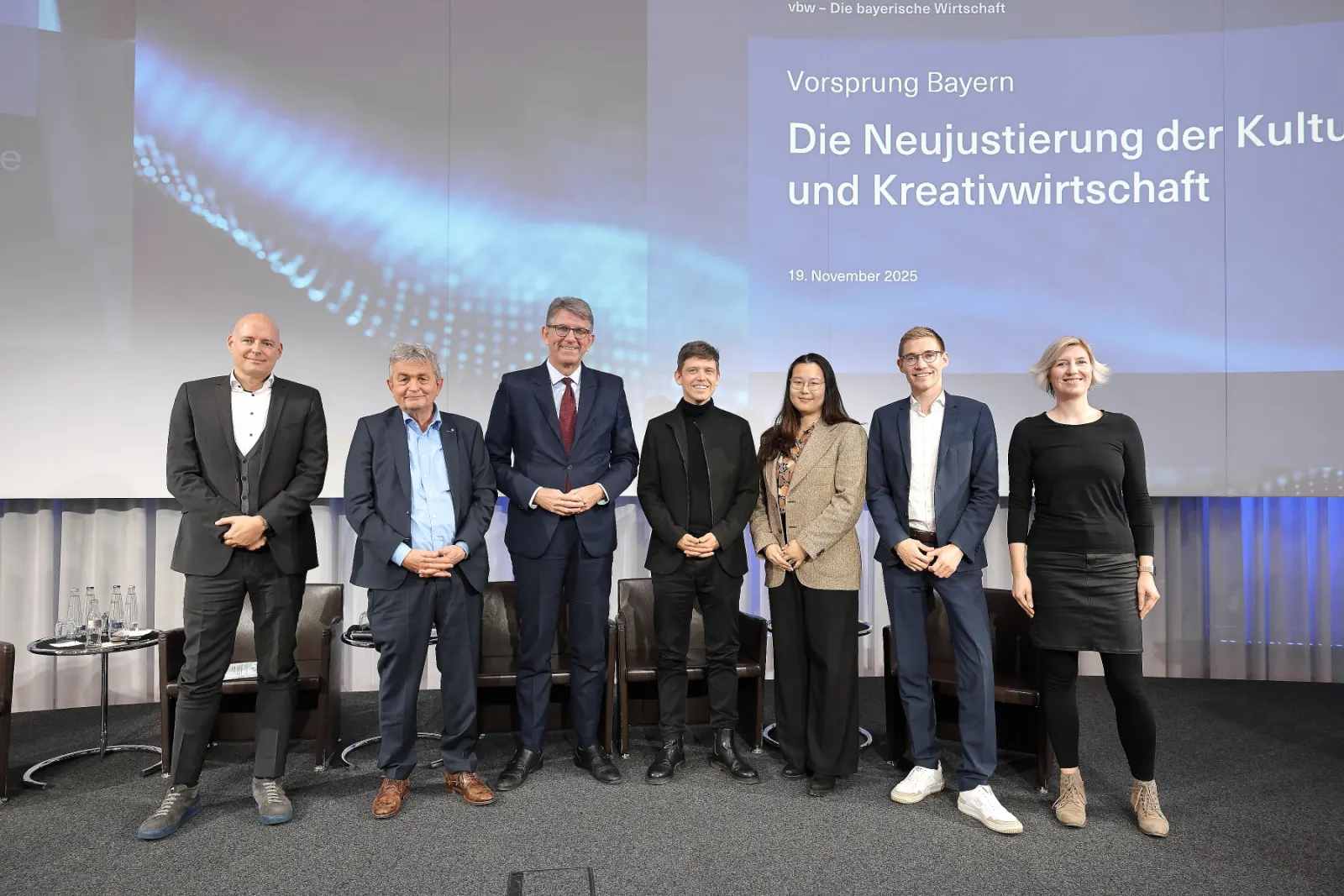
vbw Media Congress - Panel with the Minister of State

At the vbw Media Congress in Munich, Christian Steinau discussed AI, creative work and the future of the cultural and creative industries.

Group photo from the vbw Media Congress in Munich

The appearance made clear that questions of AI adoption are no longer niche topics, but lie at the centre of cultural and economic policy development. For us, the panel was an important place to connect empirical research, cultural policy analysis and strategic questions of the future in a broader public setting.

View project →
Jul 2025
PAPER

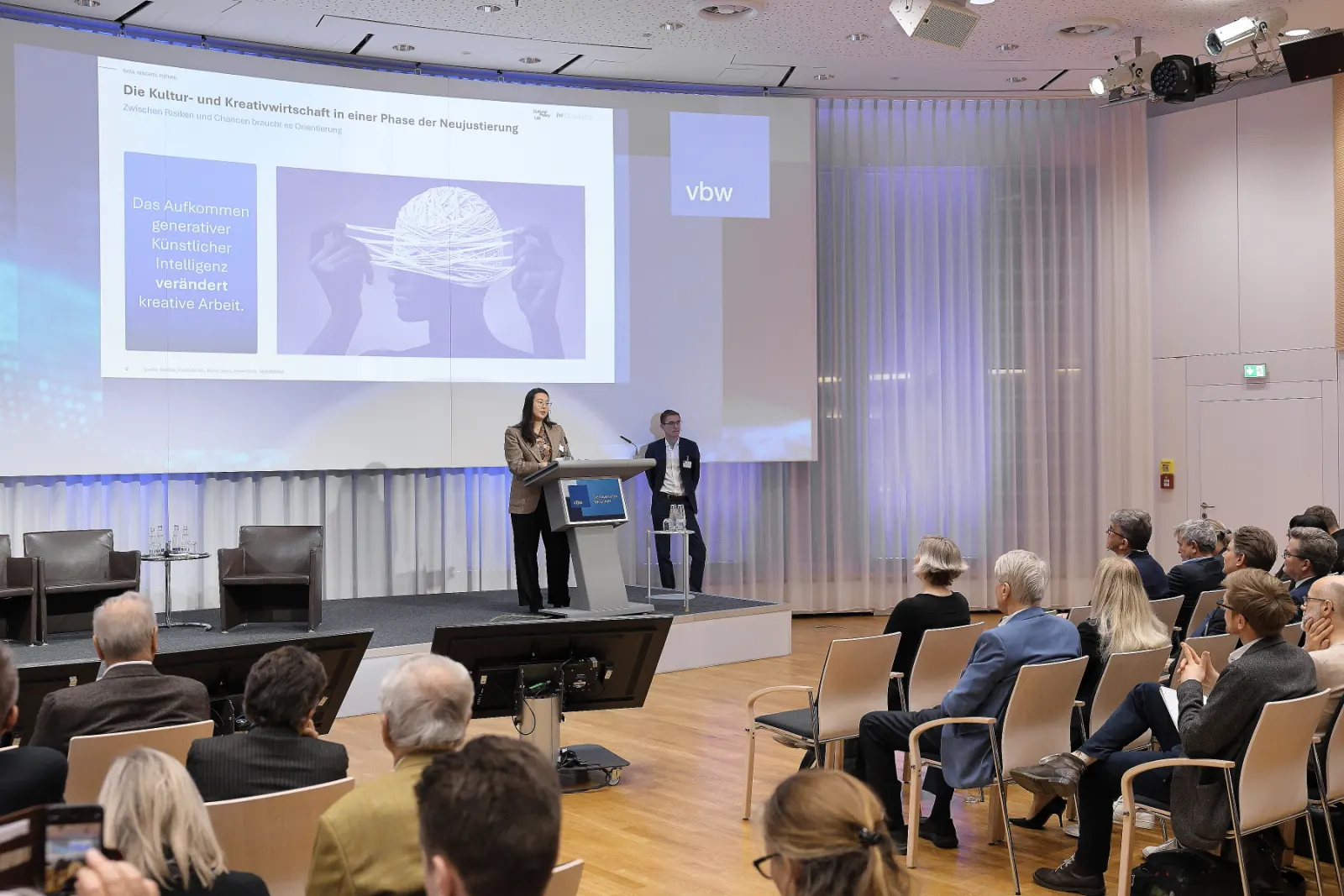
AI Impact on the Cultural and Creative Industries in Bavaria

Together with the Bavarian Association of the Cultural and Creative Industries, vbw and IW Consult, we are working on a study on AI in Bavaria's cultural and creative industries.

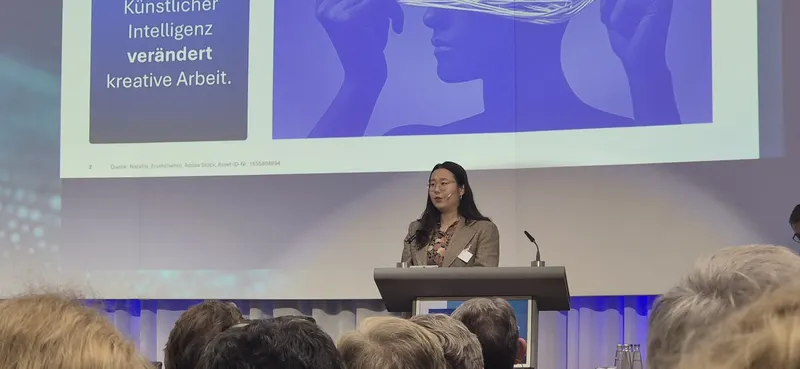
Presentation slide on AI and the cultural and creative industries in Bavaria

The study combines economic analysis, sector expertise and cultural policy interpretation. It focuses on actual use cases, changes in working methods and business models, and the question of which framework conditions can support AI adoption in the cultural and creative industries. On this basis, we are developing concrete approaches for policy, associations and companies together with our partners.

Zur Studie → View project →
Jul 2025
EVENT

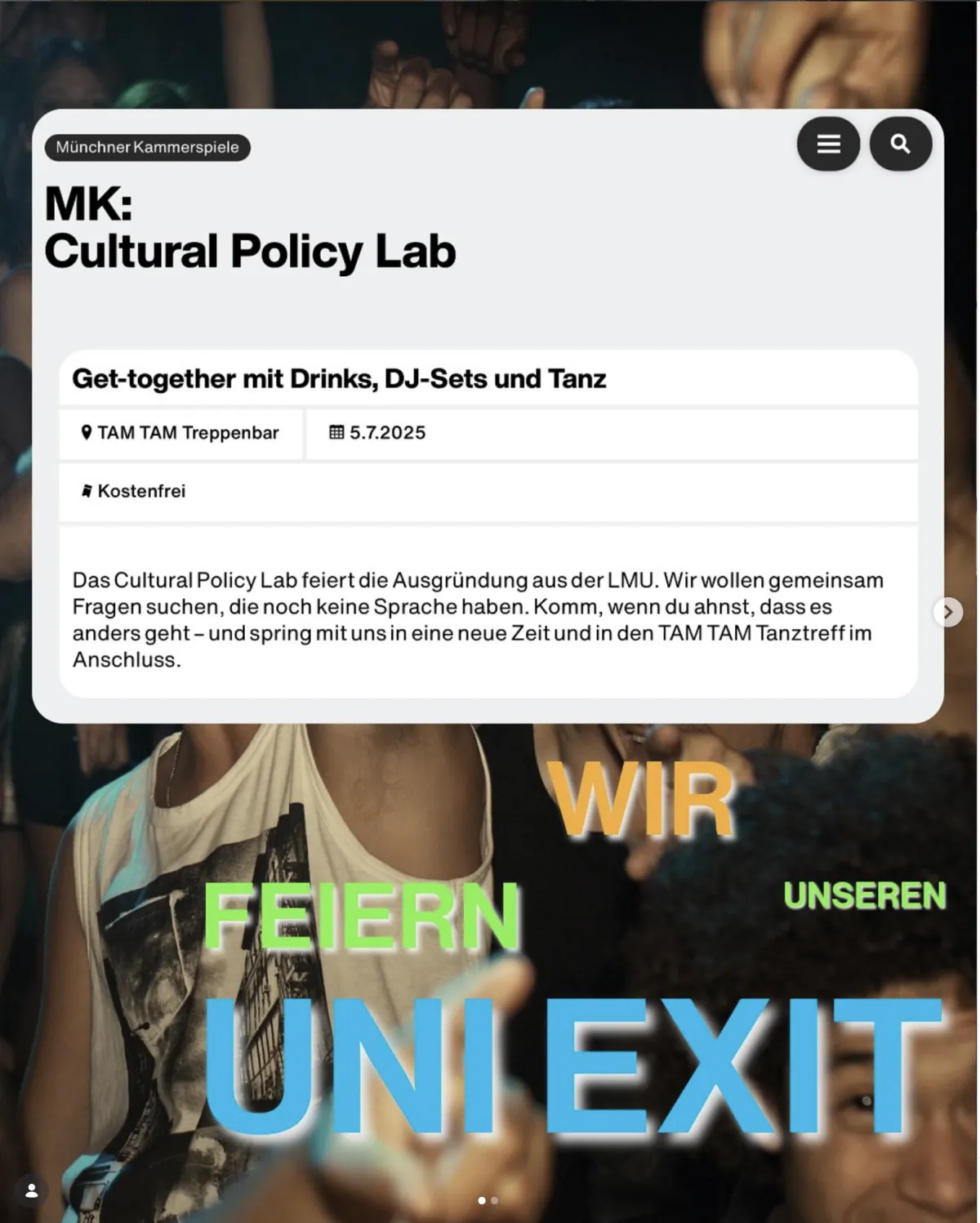
Spin-out Celebration of the Cultural Policy Lab at Muenchner Kammerspiele

At the Muenchner Kammerspiele, we publicly marked the spin-out of the Cultural Policy Lab from LMU Munich.

Announcement screenshot for the Cultural Policy Lab spin-out celebration at Muenchner Kammerspiele

The event marks an important transition in the development of the lab: from a university-based transfer project to an independent structure for research, strategy, communication and applied cultural policy. For the news page, it is a key moment because it makes the lab's institutional development visible.

Zur Veranstaltung → View project →
Jul 2025
PRESS

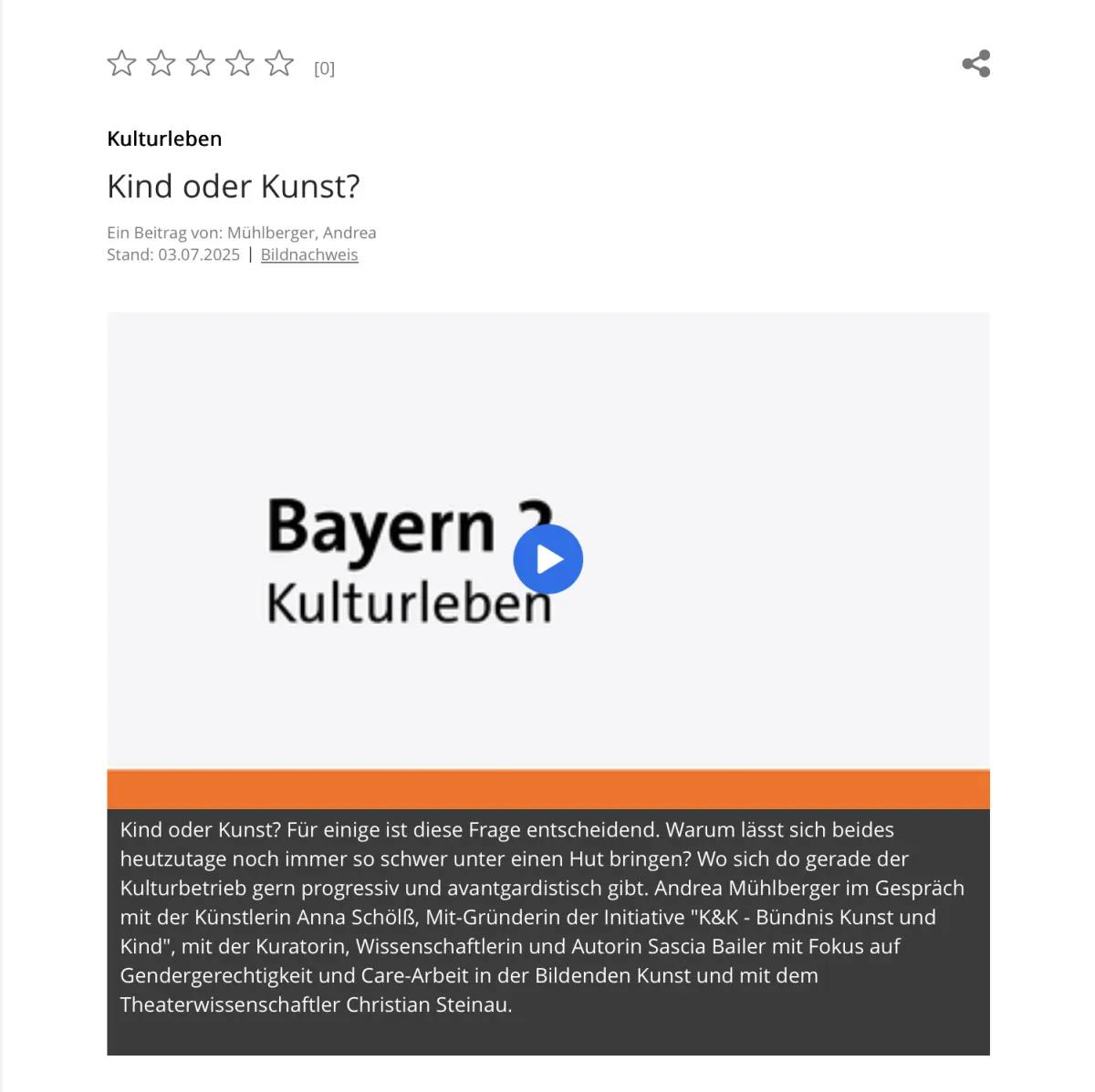
Radio Feature on Bayern 2: Child or Art?

In a Bayern 2 feature on the family-unfriendly structures of the cultural sector, Christian Steinau discusses the structural problems of care, work and cultural institutions.

Screenshot of the Bayern 2 feature Kind oder Kunst?

The feature addresses a topic that has shaped our work for years: the question of how working realities in the cultural sector relate to care responsibilities, family life and institutional organisation. For the news page, it is an important press item because it shows that our perspective also feeds into broader public debates on work, culture and social infrastructure.

Zum Beitrag → View project →
Jun 2025
LAB

Music Strategy for Hanover

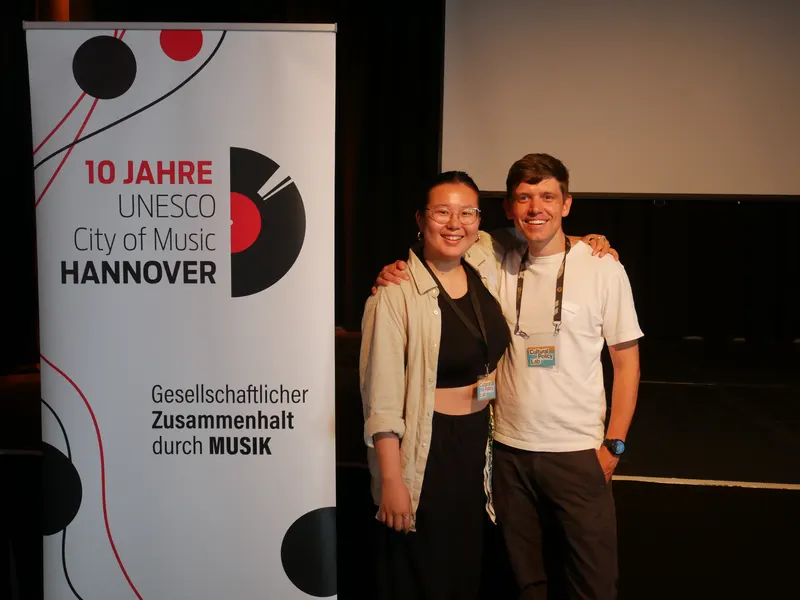
Together with Netzwerk Junge Ohren, we are developing a participatory music strategy for the City of Hanover.

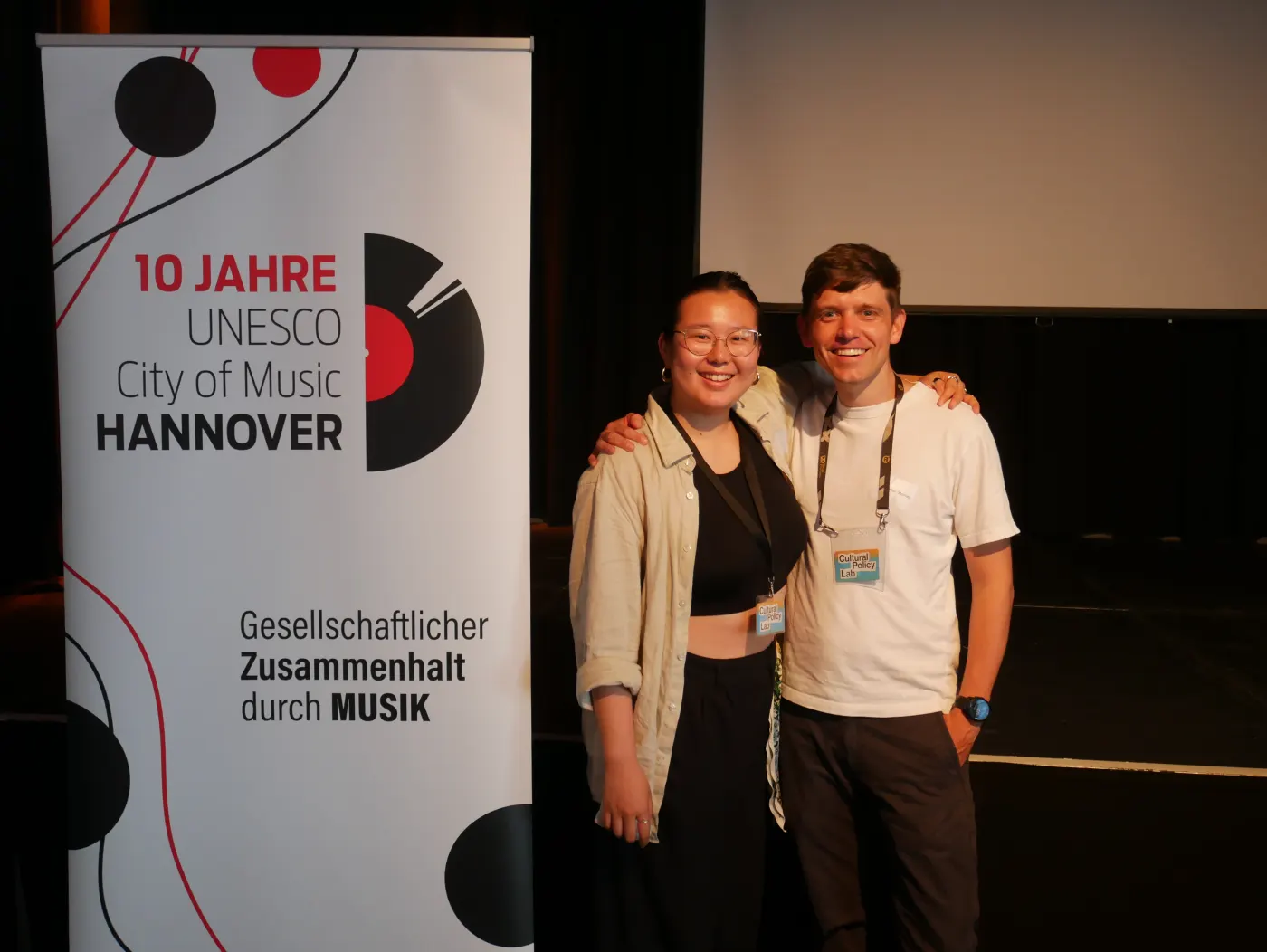
Sophia Liu and Christian Steinau at UNESCO City of Music Hanover

The work combines participatory workshops, digital participation and new methodological approaches in cultural consulting. At the centre is a knowledge graph that makes Hanover's music ecosystem visible. In this way, new approaches emerge to understand relationships, clusters and lines of development in the field more precisely and to derive strategic measures from them.

Zur Musikstrategie →
Jun 2025
LAB

Audience Analysis for Science Communication — MSCL

Science communication assumes it knows its audience — but does it? We worked with the Munich Science Communication Lab (MSCL) on a workshop that took a step back before going forward.

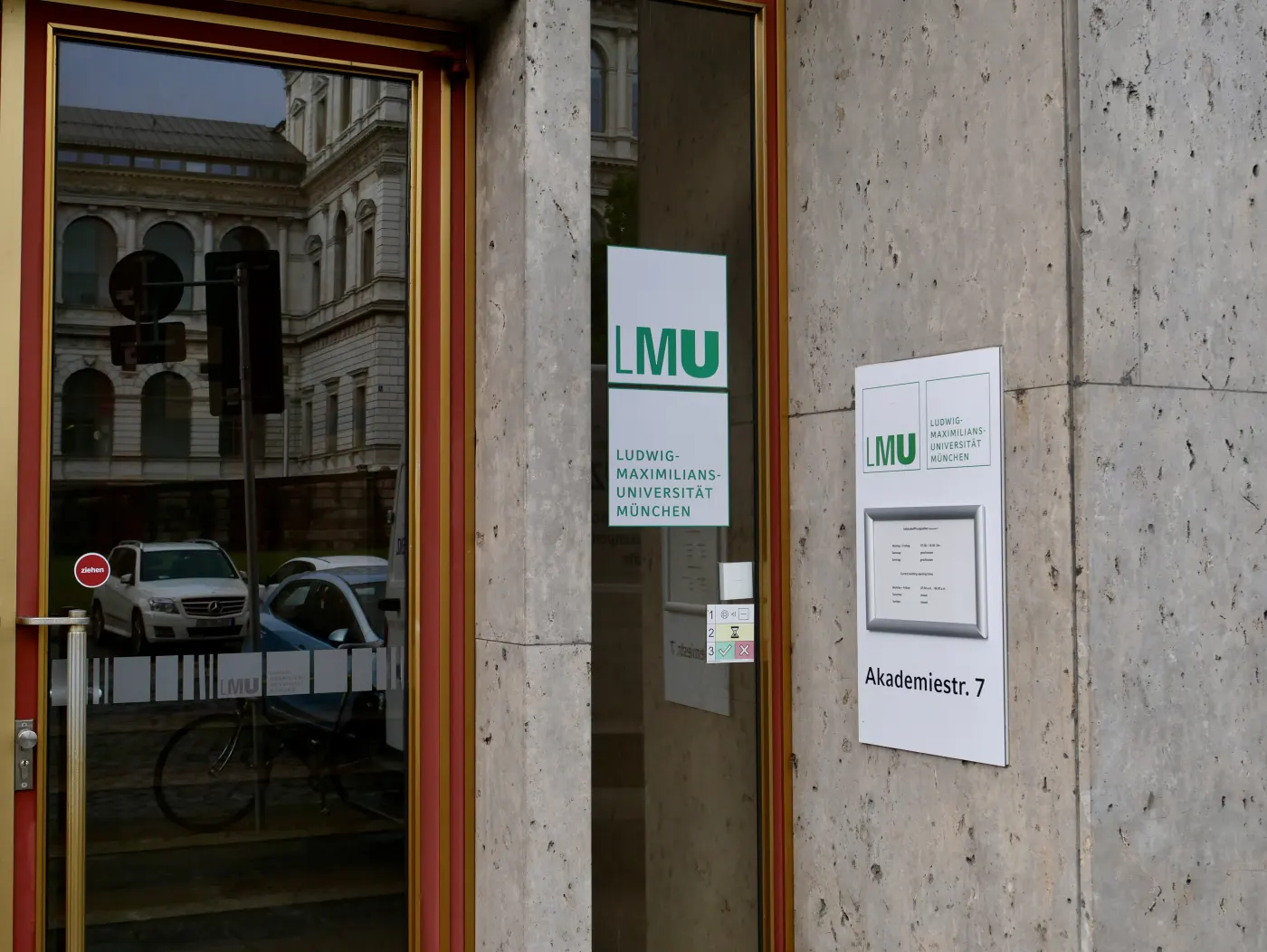
Entrance of the LMU building connected to the Munich Science Communication Lab

Instead of optimizing existing formats, we first built audience personas from actual behavioral data and qualitative interviews, then tested them against the communication strategies currently in use. The gap was striking. Several formats were reaching people who were already convinced, while the audiences that institutions claimed to target were almost invisible in their actual reach data. The workshop ended with a prioritization exercise that forced teams to make uncomfortable trade-offs between reach and depth. One team decided to kill their most popular newsletter format — because it was popular with the wrong people.

Jun 2025
LAB

Evaluation of the Johann Friedrich von Cotta Literature and Translation Prize

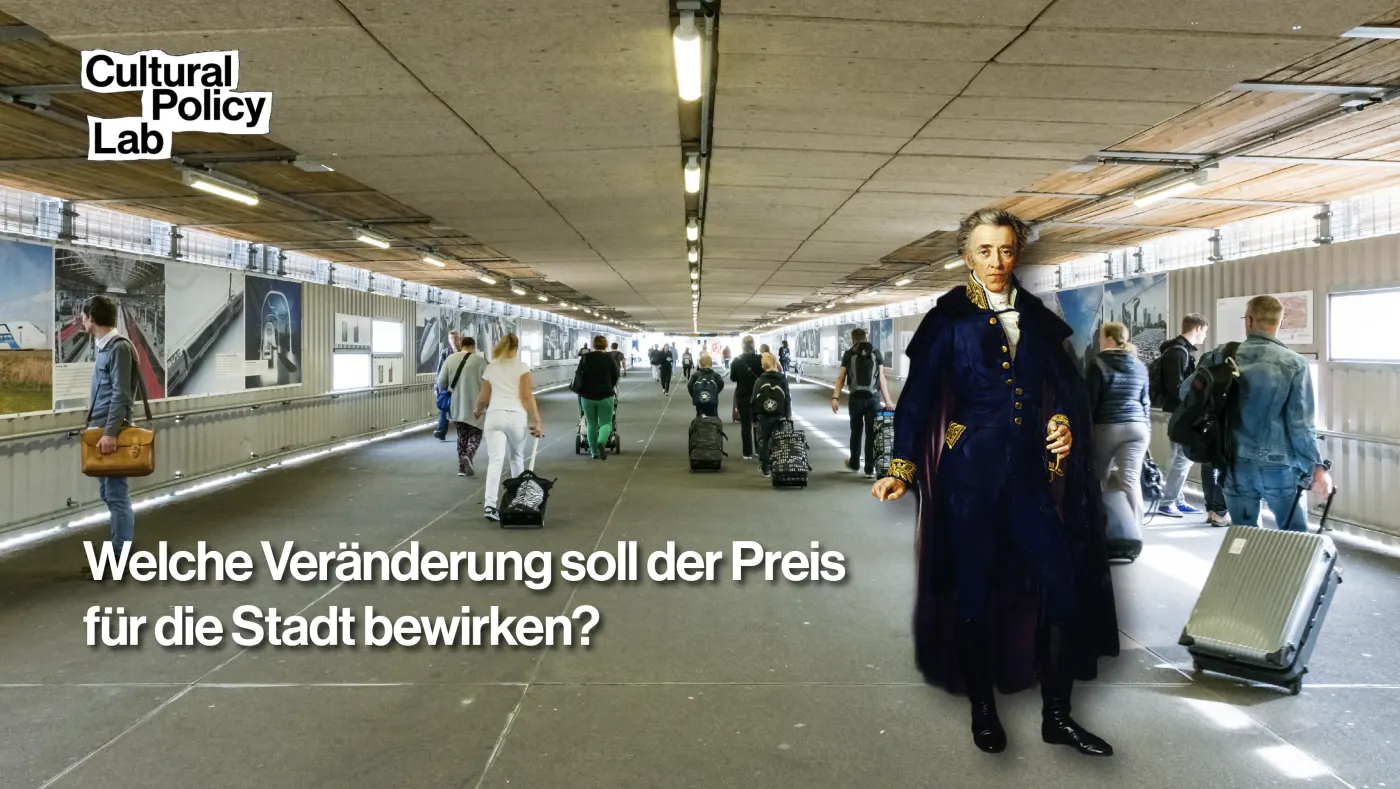
Commissioned by the City of Stuttgart, we are evaluating the Johann Friedrich von Cotta Literature and Translation Prize using new methods of impact analysis.

Visual for the evaluation of the Johann Friedrich von Cotta Literature and Translation Prize

The project combines evaluation with design: we analyse the impact of the prize using new methodological approaches and develop scenarios for its reconception. For the Cultural Policy Lab, this is exactly the right kind of commission at the intersection of analysis and strategic development. The fact that Christian Steinau comes from Comparative Literature - MA at the Peter Szondi Institute at FU Berlin (2016), PhD at LMU Munich - makes this a particularly fitting match: literary scholarship meets cultural policy evaluation practice.

Jun 2025
EVENT

Future Skills with the Cultural Policy Lab

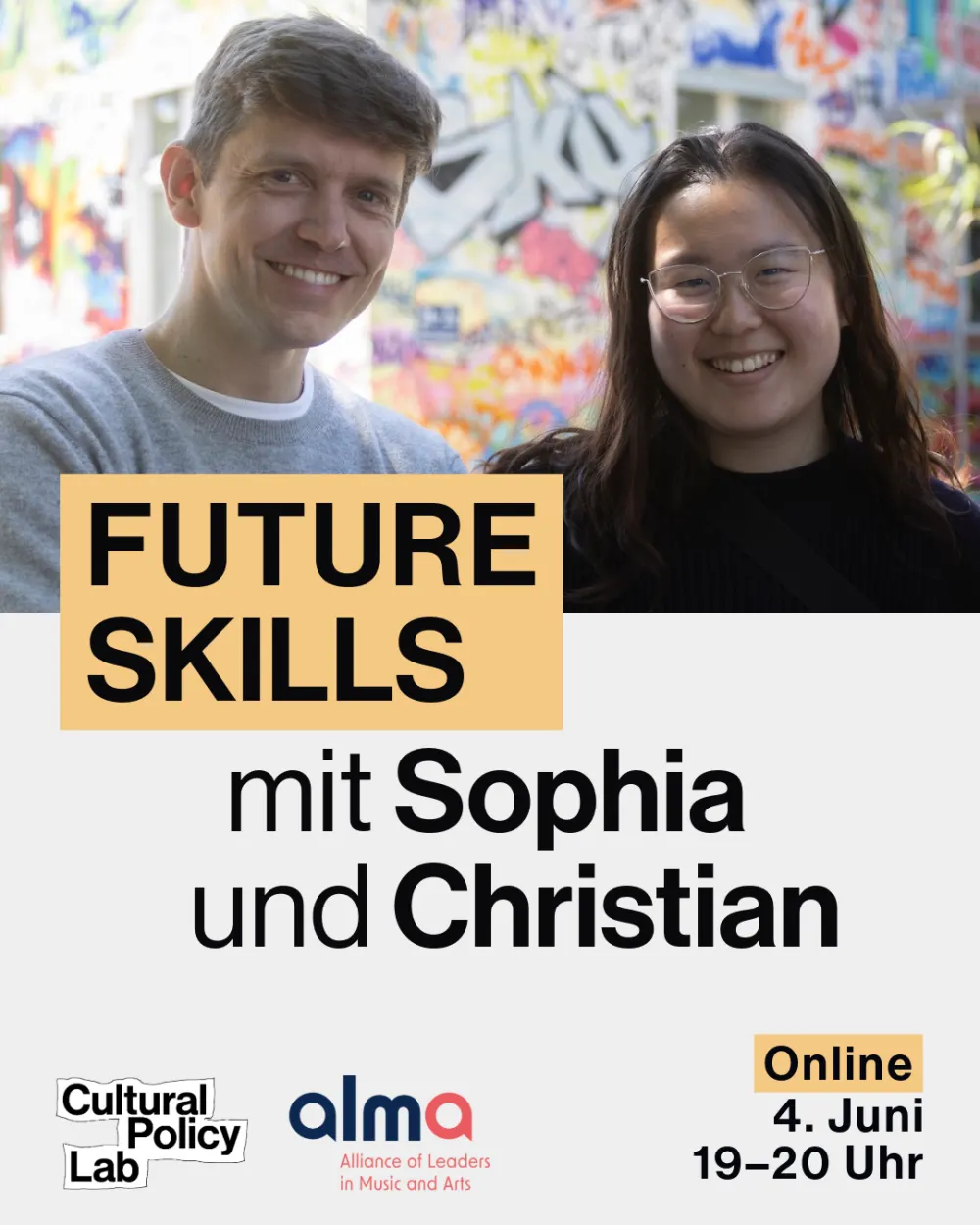
At alma Future Skills, Christian Steinau and Sophia Liu spoke about how cultural policy can become more strategic, effective and future-oriented.

Poster for Future Skills with Sophia Liu and Christian Steinau

The session presented a concise version of a core aspect of our work: connecting research, strategy, communication and new formats for cultural institutions and cultural administration. At the centre was the question of how cultural work can become more effective through new tools, platforms and methodological approaches. For the news page, this entry is relevant because it captures our way of working well: data-informed, practice-oriented and open to new forms of communication and participation.

Zum Termin →
Mar 2025
LAB

TikTok and YouTube for Cultural Policy Communication

By building our own channels on TikTok and YouTube, we began to translate cultural policy issues systematically into social media environments.

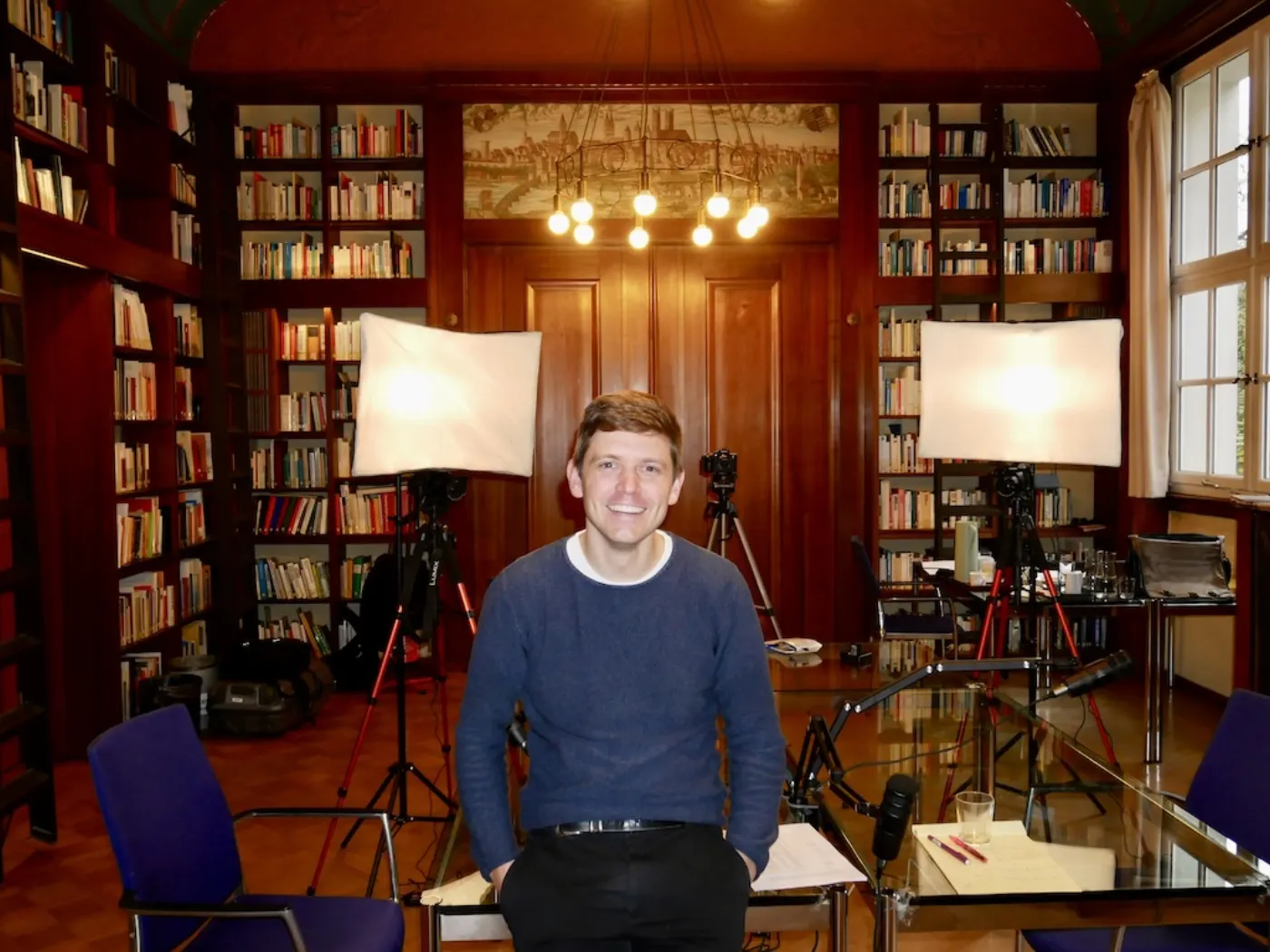
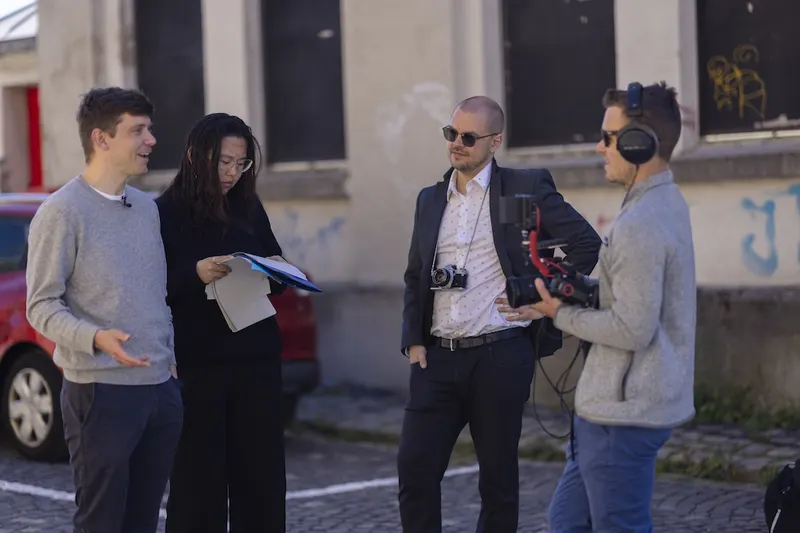
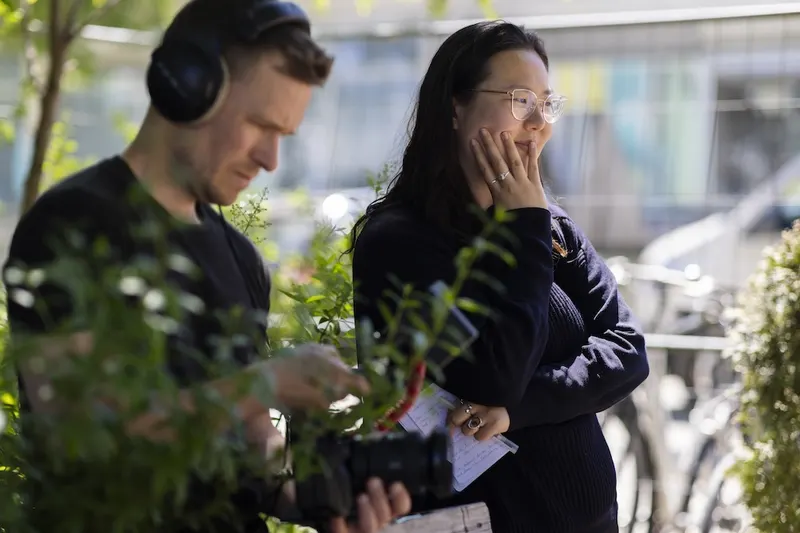
Cultural Policy Lab recording setup for social media communication

The starting point was the observation that many cultural policy debates remain within relatively closed expert publics. Our aim was therefore to test new formats that could open up issues such as AI, power, culture wars, strategy, participation and impact analysis to broader audiences. Work on the channels served not only to build reach, but also as a learning space for audience analysis, process communication and new forms of cultural policy publicness.

Zum TikTok-Kanal → View project →
Feb 2025
LAB

State Culture Report NRW

For the Ministry of Culture and Science of North Rhine-Westphalia, we are working on the chapter on the economic and social situation of cultural workers in NRW.

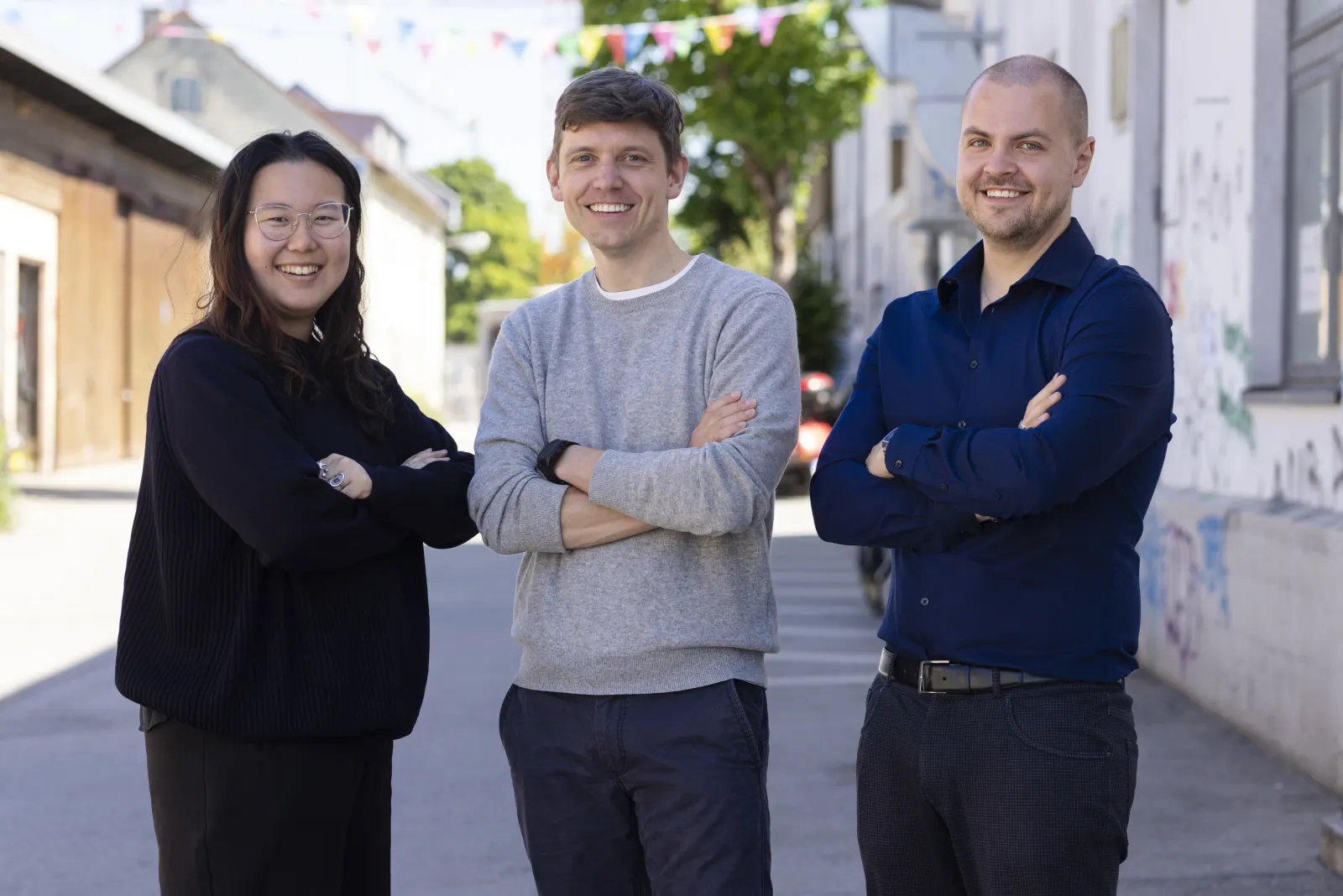
Team portrait used for the State Culture Report NRW entry

At the core of our work is the question of how complex statistical data can be prepared in ways that are readable both for ministerial decision-making and for cultural policy debate. To do this, we combine secondary data analysis, cultural policy interpretation and our own visualisations in R. A particular focus lies on new representational formats in cultural statistics, including boxplots, which make differences, ranges and structural inequalities more visible.

Zum Landeskulturbericht → View project →
Dec 2024
PAPER

Good Working Conditions at Theatre - Also for Families?

In a paper for the Friedrich-Ebert-Stiftung, Christian Steinau shows why family-friendly structures in theatre are a key cultural policy issue for the future.

Visual announcement for the policy toolkit on family and care in theatre

The publication directly connects to the work on the Policy Toolkit for Family and Care in Theatre and translates the debate into a form that is highly usable for cultural policy. It focuses on the structural deficits of theatre organisation and on the question of how care responsibilities, working conditions and institutional viability can be thought together.

Zur Publikation → View project →
Oct 2024
PAPER

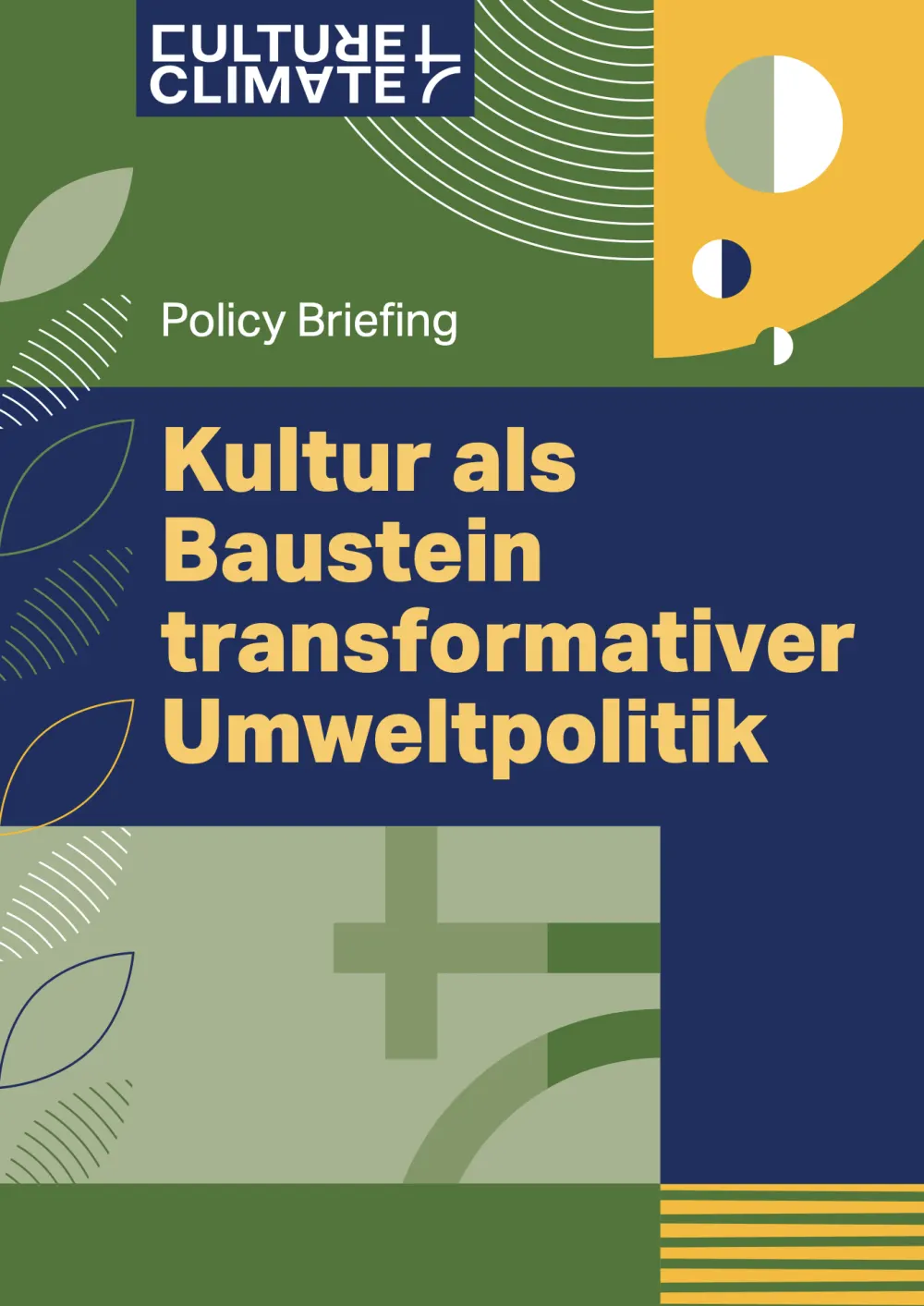
Policy Briefing: Culture as a Building Block of Transformative Environmental Policy

Together with partners from culture, environmental policy and civil society, a policy briefing was developed on the cultural policy potential of transformative environmental policy.

Cover of the policy briefing on transformative environmental policy

The briefing shows how cultural policy, sustainability and social transformation can be linked productively. For us, it is an example of why cultural questions should not be treated as a marginal aspect of ecological transformation, but as part of its infrastructural, social and political preconditions.

Zum Policy Briefing →
Oct 2023
EVENT

Autumn Academy 2023: #Systemupdate - Digital Transformations in the Cultural Sector

Christian Steinau was part of the programme of the Kulturpolitische Akademie's Autumn Academy on questions of digital transformation in the cultural sector.

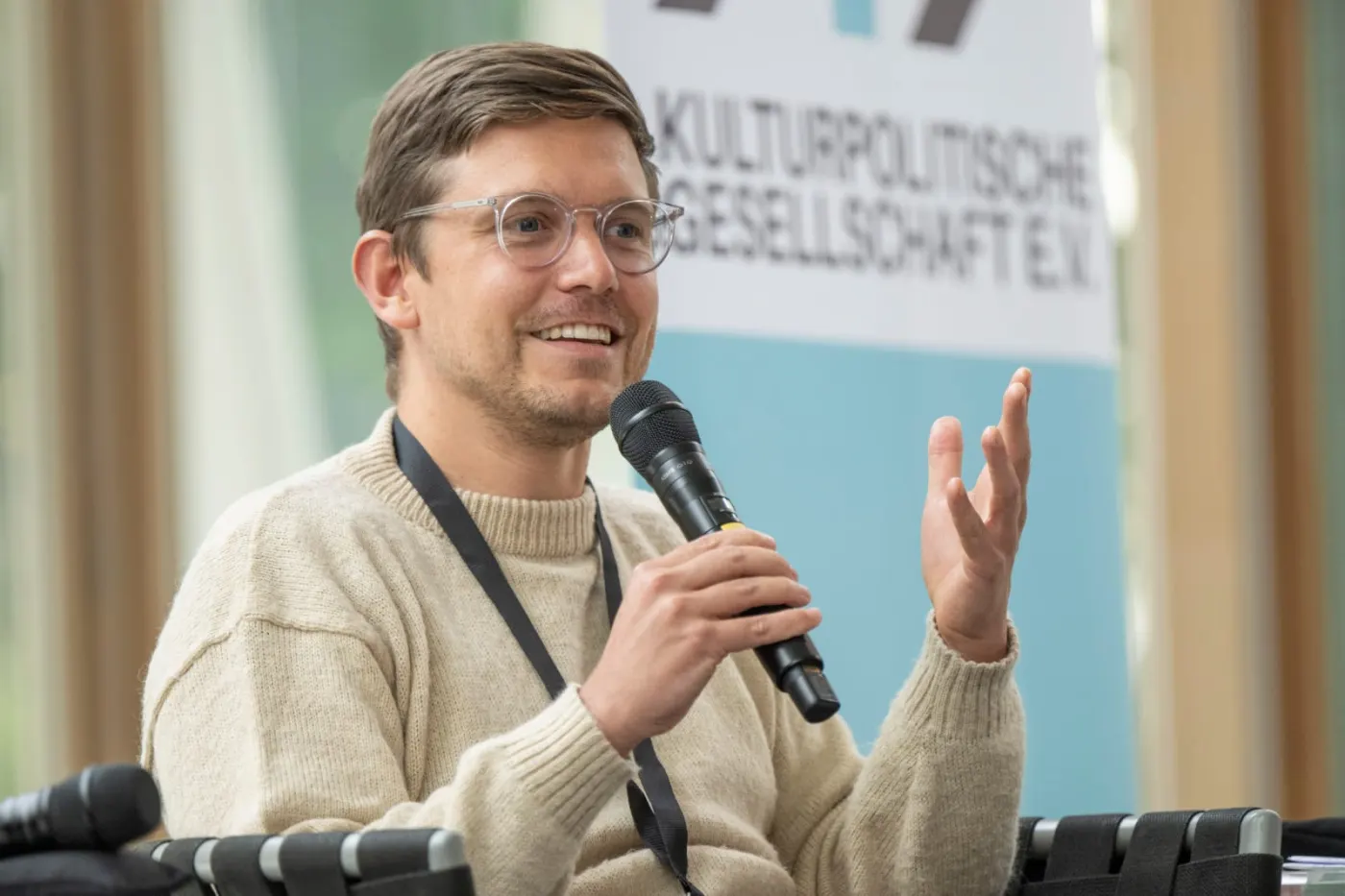
Christian Steinau speaking at the Autumn Academy 2023

The appearance shows that our work engaged early with the systemic consequences of digital transformation in the cultural sector. For the news page, it is a meaningful entry because it connects debate, network-building and programmatic positioning in the field.
Zum Programm →
Aug 2023
PAPER

Sustainability and Climate Protection in Cultural Policy

In the final project report of the Institut fuer Kulturpolitik at the Kulturpolitische Gesellschaft, Christian Steinau contributes to questions of sustainable and climate-just cultural policy.

Photo

The report shows that our work is not only rooted in AI, data and evaluation, but also in debates on climate and transformation. For the news page, this is an important paper entry because it documents both the thematic breadth of the lab and its long-term engagement with sustainability issues.

Zum Bericht →
Nov 2022
PAPER

From Culture for All to the Cultural Green Deal

In the 2021/22 Yearbook for Cultural Policy, Christian Steinau writes about the relationship between cultural policy, sustainability and the Green Deal.

Photo

The contribution is an important marker that questions of ecological transformation have been part of our cultural policy work for several years. It links classic debates on participation and democratisation with new requirements for a sustainable and future-oriented cultural policy.

Zum Beitrag →
Oct 2021
PAPER

Staging the Lab

With Staging the Lab, the first publication series of the Cultural Policy Lab appeared in 2021.

Photo

The publication documents the early conceptual and institutional questions of the lab. It stands for the ambition to develop research, design, cultural policy and public intervention not as separate fields, but within one shared framework of work.

Zur Publikation → View project →
Aug 2021
PAPER

Everything is live now

With Everything is live now. Das Kunstsystem im Ausnahmezustand, edited by Birte Kleine-Benne, an early editorial response to the pandemic in the art system took shape.

Photo

The publication shows the editorial and scholarly breadth of the lab at a moment when cultural institutions and artistic production were under enormous pressure. For the news page, it is an important marker of how early the lab responded to new crisis conditions with publishing formats.

Zur Publikation → View project →
Feb 2020
LAB

First Cultural Policy Lab at the Muenchner Kammerspiele

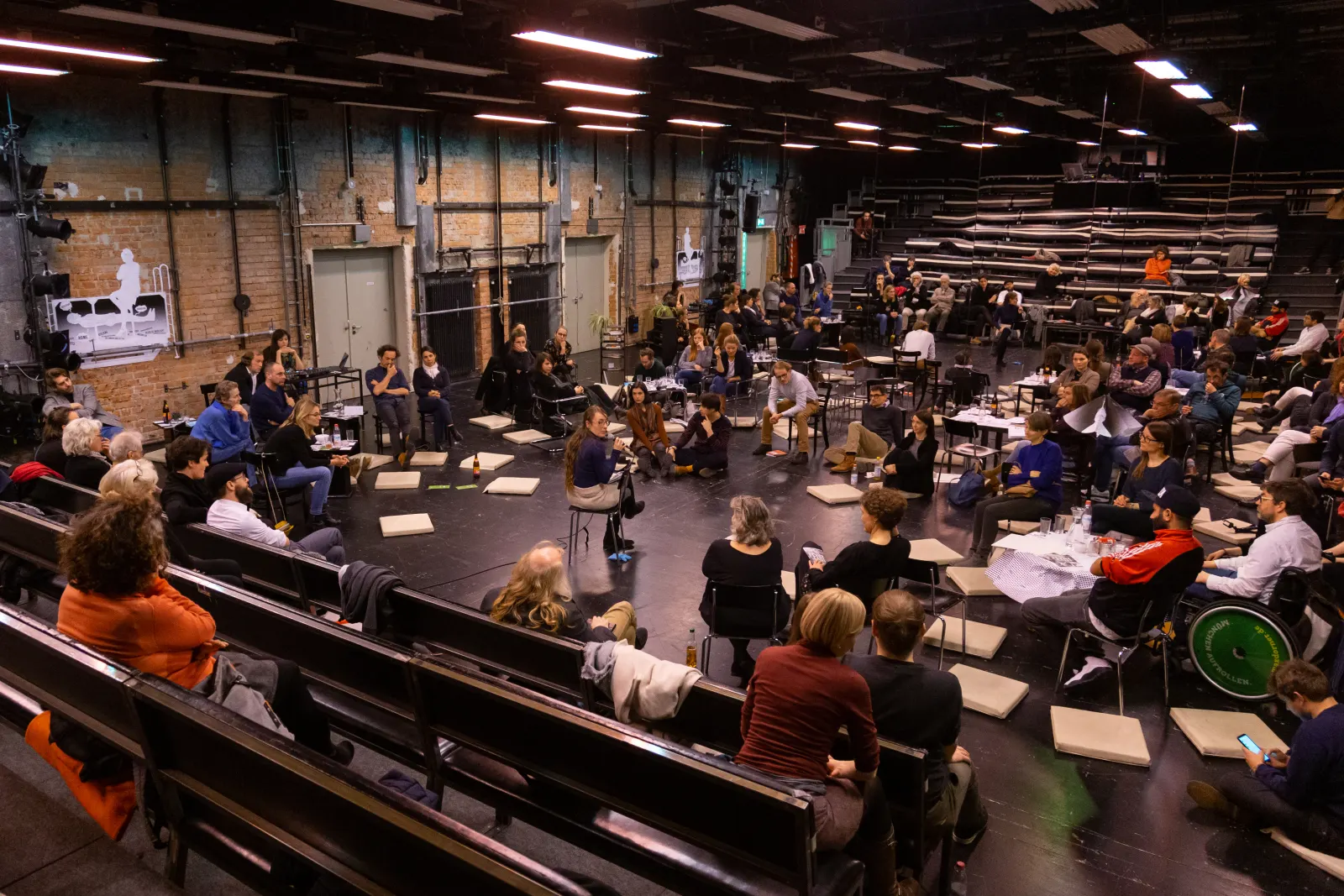
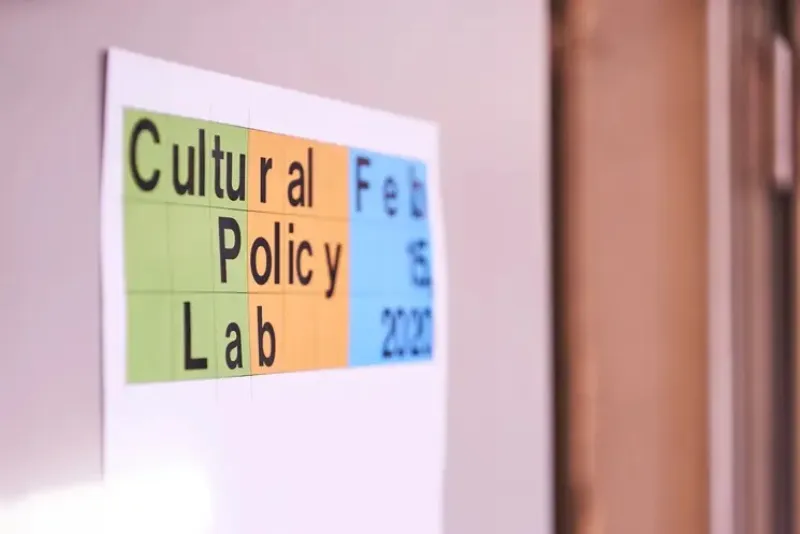
On 15 February 2020, the first Cultural Policy Lab took place in Kammer 3 at the Muenchner Kammerspiele — the beginning of a long journey.

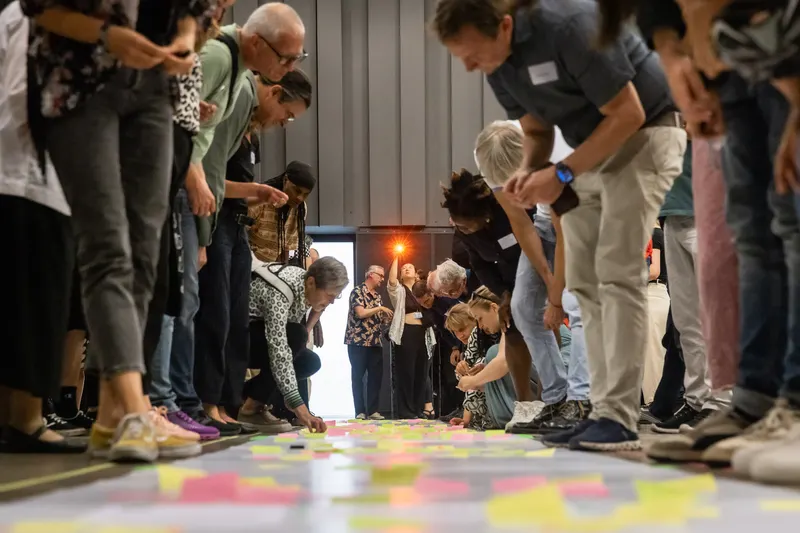
Audience and discussion setting at the first Cultural Policy Lab in the Muenchner Kammerspiele

As the final event of the research seminar on Institutional Aesthetics at the Institute of Theatre Studies at LMU Munich, Kammer 3 was transformed into a research laboratory for an afternoon. Under the direction of Christian Steinau, theatre studies students, actors from Munich's arts and culture scene, journalists and cultural policy makers came together. Four lab table rounds explored institutional aesthetics, audience research, participation and cultural policy challenges. Greetings were delivered by Martin Valdes-Stauber (dramaturg, Muenchner Kammerspiele) and Iris Bramsemann (Kulturpolitische Gesellschaft / Theatergemeinde Muenchen). In the evening, Prof. Christopher Balme presented the Cultural Policy Lab, followed by a panel discussion. What began as a university experiment became the starting point for everything that followed: publications, cooperations, new formats — and eventually the lab's spin-off.

Cultural Policy Lab bei den Muenchner Kammerspielen → View project →
Sep 2019
PRESS

Guest Contribution in Sueddeutsche Zeitung on the Muenchner Kammerspiele

Together with Christopher Balme, Christian Steinau published a guest contribution on the debate around Lilienthal, criticism and cultural public debate in Munich.

Photo

The text is an early marker of Christian Steinau's public voice in the field between theatre, criticism and cultural policy. For the news page, it works as a press entry because it shows that central questions later associated with the lab had already entered public debate before its institutional spin-out.

Zum Gastbeitrag → View project →
1 / 1

You have a question, an idea, or a project looking for a fresh approach? We look forward to the conversation — straightforward, curious and eye to eye.

The Cultural Policy Lab is in a phase of transition. We aim to deliver fresh impulses with entrepreneurial energy. CPL is currently run as a sole proprietorship by Dr. Christian Steinau. A formal company founding is planned once market entry is established.
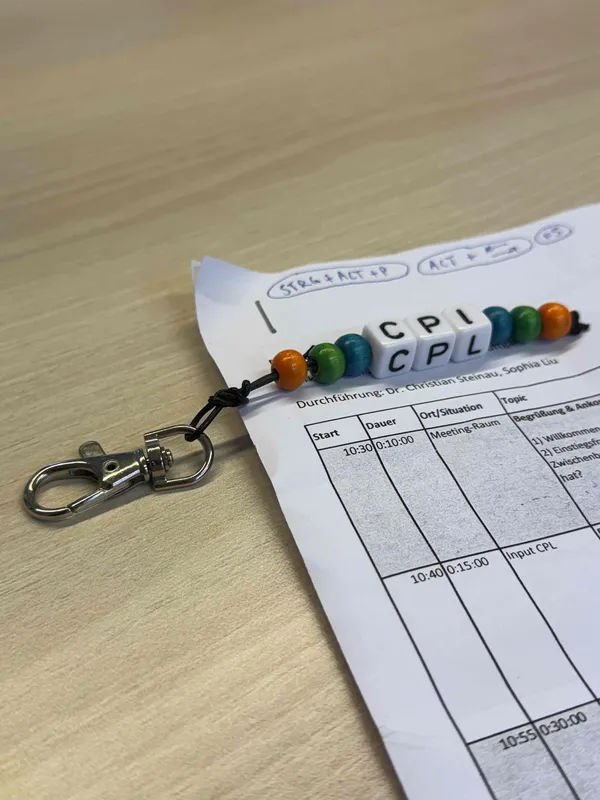
CPL Freundschaftsband aus Buchstabenperlen

We invest in lasting relationships.
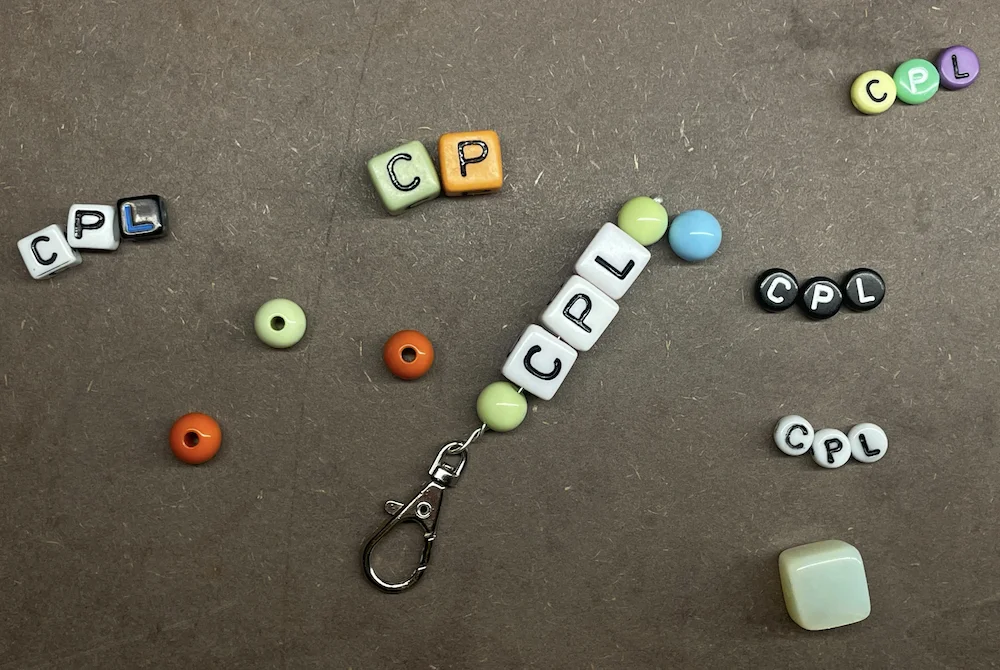
Getting to the core of complex problems and actually making change happen — that takes trust, commitment and partners who stay. That's why we build relationships, not just projects. And sometimes, that starts with a bracelet.

Get yours →
About Portfolio Work Team News Contact